

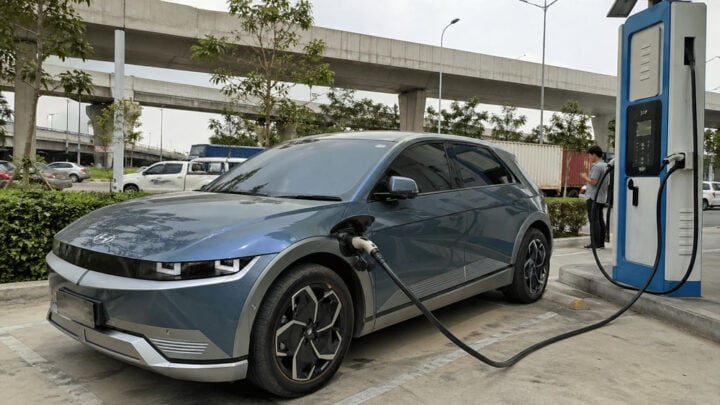
Thailand is taking a new step in the transition to cleaner transport. The Ministry of Transport is preparing an action plan to stimulate the purchase of electric vehicles. The government aims for an additional 300.000 electric vehicles on the road and intends to combine tax benefits with a trade-in scheme for old cars to achieve this.
Taxis, older passenger cars, and public transport vehicles are the main focus. According to Deputy Minister of Transport Siripong Angkasakulkiat, the measure is intended to help transporters reduce their fuel costs while simultaneously improving air quality in Thai cities. The plan is currently under financial review by the Ministry of Finance.
Trade-in scheme must also help public transport
The first proposal is an expansion of the existing car trade-in policy. This scheme would apply not only to private vehicles but also to public transport. Taxis, in particular, are prominently included in this. The government wants drivers to switch from fossil fuel vehicles to electric models more quickly.
This is important for cities like Bangkok, where many taxis travel long distances daily and contribute to air pollution. By phasing out older vehicles and making electric alternatives more attractive, the government aims to reduce both driver costs and emissions in busy urban areas.
Lower motor vehicle tax for electric cars
The second measure concerns the annual motor vehicle tax. For electric and hybrid vehicles, a reduction of up to 80 percent is being considered. Full exemption during the transition period is also on the table.
According to the ministry, this should lower the financial barrier for motorists. An electric car is still more expensive to purchase than many conventional models. By reducing fixed annual costs, the government hopes to make the choice for cleaner transport more attractive. The measure must first be financially coordinated with the Ministry of Finance before the cabinet makes a decision on it.
Royal Decree can take effect in June
Siripong stated that the financial implications of the plan are currently being discussed with the Ministry of Finance. Only after that can the proposal be submitted to the Cabinet. If the measures are approved, they are expected to be enshrined in a royal decree.
That decree could possibly come into force as early as June. This would give the campaign a formal legal basis. For drivers and transport companies, clarity regarding the conditions is particularly important: who is eligible, which vehicles count, and how quickly can the switch to electric transport take place in practice?
Diesel subsidy for the transport sector has been discontinued
The new EV plans align with previous support measures for the transport sector. In total, 55.217 transport companies and 206.529 vehicles applied for the government subsidy for diesel fuel. That scheme has now closed.
The subsidy applied to public buses, vans, taxis, motorcycle taxis, and trucks. For petrol taxis, a fixed support amount of 5.040 baht per vehicle is provided. However, there is a condition for this: the taxi must drive at least 2.500 kilometers during the 42-day support period. This distance is tracked via an application from the Department of Land Transport.
Taxis and old passenger cars are the main target.
Petrol taxis and older passenger cars are viewed by the government as key groups for the transition to electric driving. It is precisely these vehicles that drive high mileage, and replacement can have a rapid impact on fuel consumption and emissions.
The government is therefore investigating whether incentive measures for taxis can be further strengthened. This should make the transition smoother for drivers wishing to replace their vehicles. At the same time, the government emphasizes that public transport licenses remain reserved for Thai citizens. This rule therefore continues to apply when switching to electric taxis.
With this plan, Thailand is opting for a practical route to cleaner transport: lower taxes, trade-in support, and targeted assistance for taxis and transport companies. Whether the ambition of 300.000 electric vehicles is feasible now depends primarily on the financial implementation and the speed with which the cabinet approves the proposal.
Source: Bangkok Post
About this blogger

-
This article has been written and reviewed by the editorial team. The content is based on the author's personal experiences, opinions, and independent research. Where relevant, ChatGPT was used as a tool for writing and structuring text. We also sometimes generate photos using AI. Although the content is handled with care, it cannot be guaranteed that all information is complete, up-to-date, or error-free.
The reader is responsible for the use of the information on this website. The author accepts no liability for any damage or consequences resulting from the use of the information provided.
Read the latest articles here
 OrganizationsApril 25, 2026Marrying a Thai: why prenuptial agreements are not a luxury
 Living in ThailandApril 25, 2026Why some expats make it in Thailand and others don't (with video)
 Expats and retireesApril 25, 2026Solar panels in Thailand: how to invest smartly in solar energy in 2026
 ActivitiesApril 25, 2026Walking route through historic Bangkok: three hours through the heart of Rattanakosin