

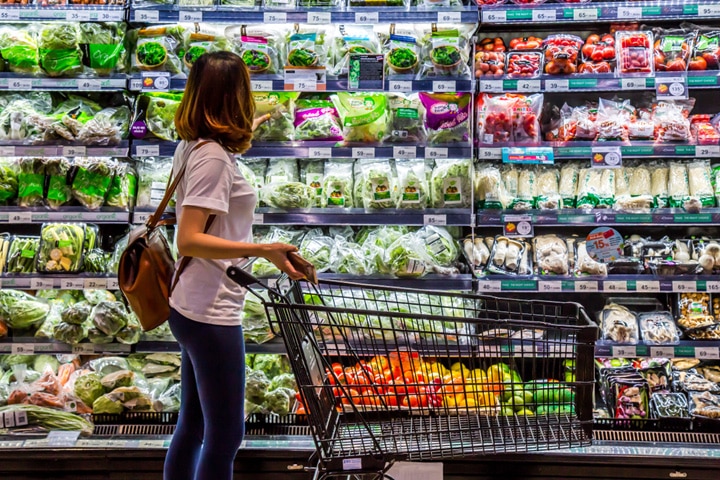
The unrest over a possible increase in Thai VAT is striking a sensitive chord. Many households fear that daily groceries, services, and other expenses will become more expensive. That concern is logical, especially now that purchasing power is under pressure and many people are scrutinizing every baht they spend.
However, this discussion is not solely about prices. Behind the debate lies a broader question regarding Thailand's direction. If the government dares to consider a higher tariff while simultaneously continuing to stimulate investment, it points to an economy driven less by low costs and more by targeted growth.
The initial shock reaction is understandable.
The initial reaction to a higher VAT is predictable and justified: people fear that daily life will become more expensive. In a country where many households keep a close eye on their spending, every extra percentage point is felt immediately at the checkout. Yet the story does not end there. Behind the discussion about raising the rate from 7 to 10 percent lies a larger question: what does this say about the direction Thailand is taking? The provided text reads the VAT discussion not only as a measure to raise more money, but primarily as a sign that the economy is stronger than before.
A higher rate as a sign of more trust
Thailand has maintained a VAT rate of 7 percent for years, while the legal maximum is 10 percent. The fact that the government is now openly considering an increase is explained in the source as more than just a fiscal intervention. It suggests that the state trusts that consumers will continue to spend, businesses will keep operating, and the economy can absorb such a step. In other words: a vulnerable country does not readily raise taxes on consumption. Precisely for this reason, this discussion is seen as a quiet but important signal of economic self-confidence and a country that has become less fragile.
The value of life continues to weigh heavily.
Even if VAT rises, according to the text, Thailand remains attractive due to something harder to capture in numbers: the daily value of life. You can still eat relatively affordably there, make use of good healthcare, and live in a society that feels flexible and welcoming. These are qualities that weigh heavily for residents and long-term visitors. The core of the argument is therefore that taxation is not the only factor determining whether a country remains livable. Value also lies in accessibility, comfort, space, and the way daily life is organized.
The government is making more targeted choices about where it wants to support growth.
It is striking that Thailand simultaneously continues to steer towards investment. While the government is considering more revenue from general consumption, tax benefits and other privileges remain available through the Board of Investment (BOI) for sectors intended to drive growth. This seems contradictory, but the text views it as a clear choice. The state is no longer attempting to keep everything cheap for everyone. Instead, it is raising funds more broadly from consumption and deploying targeted incentives where future economic value is to be created. It is therefore not just about collecting, but primarily about consciously choosing where support has the greatest impact.
Thailand no longer wants to be primarily a low-cost country.
With this, Thailand is moving further away from the old image of a country of cheap labor, low production costs, and saving for the sake of saving. The message is that Thailand no longer wants to be the cheapest, but aims to offer the right value. For outsiders, therefore, the question is not just whether taxes will rise, but primarily where the country is heading. According to the provided text, Thailand is seeking a balance between a comfortable life and economic growth. The country does not want to accelerate so fast that living and working become unsustainable, but neither does it want to stand still until opportunities disappear.
In this interpretation, therefore, a higher VAT is more than a price increase. It is a signal that Thailand wants to position itself differently: less as a low-cost country and more as a country that combines quality of life and targeted growth. According to the source, that is precisely where the true meaning of this discussion lies.
Source: Opinion piece Pattaya Mail
About this blogger

-
This article has been written and reviewed by the editorial team. The content is based on the author's personal experiences, opinions, and independent research. Where relevant, ChatGPT was used as a tool for writing and structuring text. We also sometimes generate photos using AI. Although the content is handled with care, it cannot be guaranteed that all information is complete, up-to-date, or error-free.
The reader is responsible for the use of the information on this website. The author accepts no liability for any damage or consequences resulting from the use of the information provided.
Read the latest articles here
 Expats and retireesApril 21, 2026Divorce in Thailand: much revolves around evidence and registration
 BackgroundApril 21, 2026Dutch and Belgian citizens can also become monks in Thailand, but strict conditions apply.
 Expats and retireesApril 21, 2026Why it is important to verify a Chanote title in Thailand for the purchase of a condominium or land
 Expats and retireesApril 21, 2026Home care in Thailand for Western seniors: growing market without quality certification