

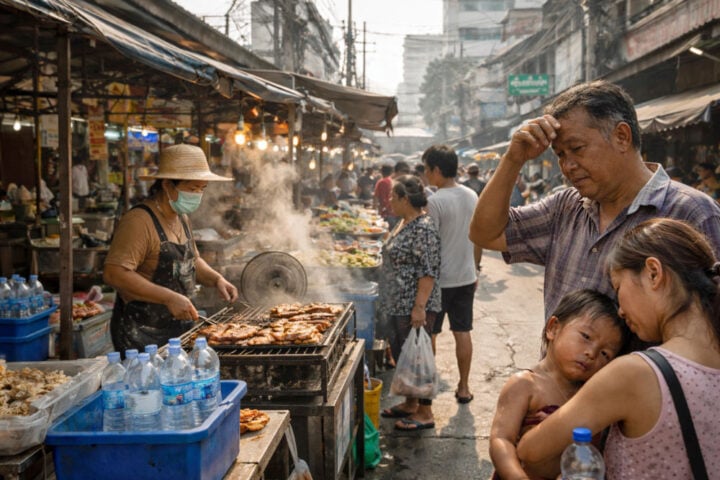
For many people, the Thai summer is primarily a season of heat, drought, and muggy days. However, the problem goes beyond mere discomfort. Due to the high temperatures, bacteria, viruses, and fungi have a greater opportunity to multiply rapidly. As a result, the risk of infections via food, water, and the skin increases.
This is now also reflected in the figures. In the first months of 2026, Thailand already reported tens of thousands of cases of food poisoning and hundreds of thousands of cases of acute diarrhea. Doctors are therefore warning that vigilance is necessary, especially among vulnerable groups and during the hottest hours of the day.
Heat makes pathogens stronger
According to Thai health experts, summer creates ideal conditions for many pathogens to grow faster. Warm and humid weather causes bacteria in food to multiply more rapidly, especially if food is left outside for too long or is not stored properly refrigerated. Water sources can also become more problematic if heat and drought affect water quality.
In addition, the heat causes increased perspiration, especially under tight or poorly ventilated clothing. As a result, fungi and bacteria thrive on the skin. The consequence is that not only do the stomach and intestines become more vulnerable, but the skin and general immunity also come under pressure.
The biggest risks are diarrhea and food poisoning.
Gastrointestinal illnesses, in particular, are prevalent in the summer. From January 1 to March 17, 2026, 39.233 cases of food poisoning were reported in Thailand. During the same period, the number of cases of acute diarrhea rose to 274.151. Two deaths were also recorded. Additionally, there were 36 reports of heat-related illnesses nationwide on March 18.
Food poisoning often occurs because prepared food is left at room temperature for too long. Symptoms usually develop quickly and consist of abdominal pain, nausea, vomiting, and diarrhea. Cholera also remains a risk via contaminated drinking water or food. Hepatitis A likewise poses a danger, especially with raw or undercooked products such as shellfish, or with fruits and vegetables that have not been properly washed.
Vulnerable groups in particular are at risk.
Not everyone is at the same risk. Young children and babies dehydrate more quickly and still have a vulnerable immune system. The elderly often do not notice dehydration as quickly, because their sense of thirst may diminish. People with chronic conditions such as diabetes, heart problems, or kidney disease can become seriously ill more quickly if infected.
Outdoor workers also belong to the risk groups. They stand in the sun for extended periods and are simultaneously exposed to heat, dehydration, and environmental factors that can promote illness. In addition, animals can become more restless and irritable in the heat. As a result, according to veterinarians, the risk of biting and scratching incidents also increases, with rabies as a serious consequence if prompt action is not taken.
Warning signs you must not ignore
Doctors emphasize that severe dehydration is one of the greatest dangers, especially for children and the elderly. Signs include dry lips, little or dark urine, sunken eyes, extreme thirst, lethargy, and a rapid heartbeat. In babies, a sunken fontanel can also be an alarm signal. Anyone who observes these symptoms must seek immediate medical attention.
High fever, confusion, rapid breathing, pale, cool skin, and persistent vomiting are also serious warning signs. In some cases, an infection can spread to the bloodstream, leading to life-threatening complications such as shock or organ failure. Self-treating is not a wise choice in such cases, as prompt treatment can make all the difference.
Simple habits make a big difference in the summer.
The best protection starts with daily hygiene. Eat only freshly prepared and thoroughly heated food, and avoid dishes that have been left outside for a long time. Wash your hands thoroughly with soap before eating, after using the toilet, and while cooking. Also, use a separate serving spoon when sharing food so that bacteria spread less easily.
In addition, proper food storage is crucial. Do not leave prepared meals at room temperature for too long and put leftovers in the refrigerator as soon as possible. Drink plenty of clean water, wear loose and breathable clothing, and try to limit strenuous outdoor activities between 10:00 AM and 3:00 PM. This will reduce not only the risk of infections but also of heat exhaustion and dehydration.
The extreme heat in Thailand is therefore more than just an inconvenience. It is also a serious health risk that becomes apparent quickly, especially in the summer. With good hygiene, safe food, and alertness to symptoms, you can prevent many problems and better protect yourself and your family.
Sources: Bangkok Post, Thai Rath, Nation Thailand
About this blogger

-
This article has been written and reviewed by the editorial team. The content is based on the author's personal experiences, opinions, and independent research. Where relevant, AI has been used as a tool in writing and structuring text. We also sometimes generate photos using AI. Although the content is handled with care, it cannot be guaranteed that all information is complete, up-to-date, or error-free.
The reader is responsible for the use of the information on this website. The author accepts no liability for any damage or consequences resulting from the use of the information provided.
Read the latest articles here
 BackgroundMay 24, 2026The abolition of slavery drove Siamese women into prostitution en masse.
 Flight ticketsMay 24, 2026Via Istanbul to Thailand: how the Turkish hub became the smart choice
 HotelsMay 24, 2026How do Thai accommodation prices compare to Vietnam and Cambodia?
 Expats and retireesMay 24, 2026Getting a mortgage as a foreigner in Thailand: which banks participate?
When you closely observe how they sometimes store and prepare their food, you really had better think twice for a moment.
Also, little physical hygiene to be found..
I used to be a professional chef myself, so I know what I'm talking about.
I know someone who works in the kitchen of a big hotel… He told me that their old frying oil and cooking oil are sold to street vendors…
I once spent 3 days in the hospital in the beginning with serious food poisoning..
I've paid close attention since then, but I've practically never eaten street food again..
My Thai wife knows the stalls or small restaurants where the food is kosher…
But usually I cook at home myself… Good French cuisine…
In the 7 years I’ve been here, I’ve only gotten seriously ill from food once. But that was in a restaurant. Never from street food. The danger lurks where you least expect it…
Even in a Michelin-starred restaurant, you can get food poisoning; if you're unlucky, you're unlucky.
I eat street food on average twice a week, and have been doing so for many years. Apart from the occasional bout of diarrhea, I have never been seriously ill.
The reactions are sometimes exaggerated.
Dear Karel,
When someone prepares a street food meal for you, you can indeed follow along with everything that is happening.
It is a good thing that you can't see what people are up to in the kitchen of a restaurant. If you think everything runs so smoothly there, you might be in for a surprise.
And about that cooking oil… if it’s hearsay, it’s probably true, we all know that 😉
My wife had fried some delicious chicken legs. We left what was left covered on the counter, and after a while, it went into the fridge. But it was already too late. When I wanted to nibble on a piece in the evening, it turned out to have that rotten taste after all. I spat it out immediately, and we threw the chicken away just to be safe. Now, with this extreme heat, I will definitely be careful not to leave anything outside the fridge for too long.
What really annoys me and makes me disgusted is that I regularly see people in shopping malls who don't even bother to wash their hands after using the toilet. Not even after a 'big' toilet.
And everything is provided … water, soap, wipes …
I once saw a young guy, he came out of the toilet stall and walked straight out. And he was dressed in a KFC jacket. Moments later, he was busily serving customers again. YUCK!!!
Washing hands after a bowel movement is completely unnecessary for a Thai person who has just cleansed themselves with a basin of water.
You sometimes see vendors wearing those plastic gloves. They wear them for everything. Because it's more hygienic now that they aren't touching your food with their bare hands. If they have an itch, they scratch. For instance, I saw a man of about fifty wearing those blue plastic gloves. He had an itch on his head and then wiped under his nose again. Bon appétit!
It is a mystery to me: in many cities, at markets, meat lies exposed in market stalls, without refrigeration in the scorching heat; it simply stinks.
Blowflies everywhere; that is just asking for food poisoning.
I subscribe to the dog philosophy that a piece of meat is better than the bone.
But when I see those horribly unhygienic things, I almost want to vomit and I become a vegetarian.
My wife usually buys meat at Makro, and if the fresh meat doesn't appeal to her, we take packaged meat from the freezer.
At Makro, I once saw a woman of Indian descent pick up pieces of pork with her bare hands, inspect them, and put them back in the bin.
My stomach turned and I spoke to her in English that what she was doing was very unhygienic.
I suspect the management of the butcher's department received a signal, because there are now plastic gloves and tongs everywhere for picking up meat, which are fortunately being used properly.
Gr. Arno