

Best SIM card for Thailand in 2026: AIS wins for most travelers and residents, True is often cheaper
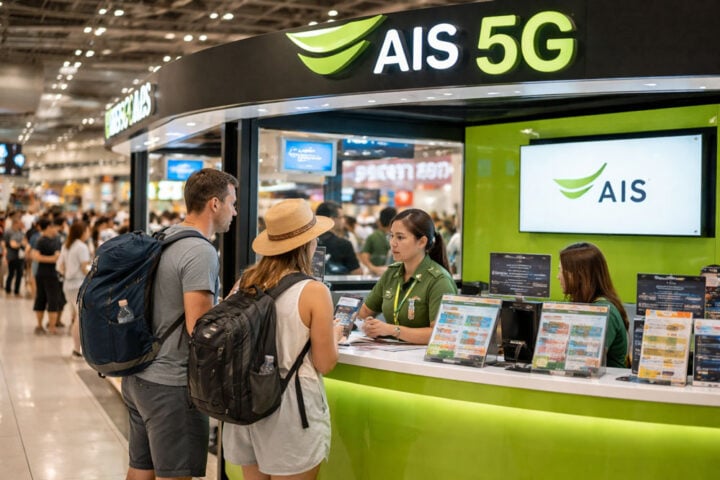
Anyone traveling to or living in Thailand wants to avoid the hassle of poor coverage, unclear bundles, or expensive roaming. Yet, that is exactly what happens to many people. Especially at airports, in tourist shops, and at online retailers, you can easily pay too much for convenience. At the same time, there are significant differences between tourist bundles, standard prepaid SIM cards, local postpaid plans, and eSIM solutions. For Dutch and Belgian citizens, additional questions also come into play: does registration work smoothly with a passport, is topping up easy, how useful is the hotspot, and is roaming still worthwhile?
To provide a practical answer to this, three types of information were compared. First, the official data from AIS, True, and NT regarding prices, contract durations, eSIM, coverage, and terms and conditions. Next, independent real-world information on speed, nationwide coverage, and user experience. Finally, a concrete interpretation per target group. The outcome is clear. In 2026, AIS will be the strongest all-round choice for those seeking certainty. True is often more attractive to those primarily focused on price and who use a lot of data. NT remains a smaller player with interesting local rates, but is less of an obvious choice for most international users.
| Provider | Strongest point | Weakest point | Best choice for | Type of offerd |
|---|---|---|---|---|
| AIS | Best all-round coverage and stable quality | Not always the cheapest | Tourists, travelers, residents outside cities | Tourist SIM, prepaid, postpaid, eSIM |
| True | Often competitively priced and strong in cities and tourist areas | Less unambiguous product information per channel | Price-conscious tourists and residents with a lot of data | Tourist SIM, prepaid, postpaid, eSIM |
| NT | Low prices on some local bundles | Less visible store structure and less obvious service for foreigners | Budget users who want to experiment locally | Prepaid and postpaid |
Why AIS is the best choice for most people
In 2026, AIS comes out on top in the comparison when you look not only at price, but at the overall picture. The provider scores highly on nationwide coverage, network quality, and usability outside the major cities. This is important in Thailand, because many travelers do not stay only in Bangkok or Pattaya. As soon as you leave the well-trodden routes, you notice the difference between a network that works reasonably well everywhere and one that performs particularly well in popular areas.
For tourists, AIS also offers clear packages with fixed durations of 8, 15, 30, and 60 days. These packages are well-organized, making them convenient for those who want to be online immediately upon arrival. For residents, AIS is particularly attractive if you want stable internet for daily use, calling, navigation, and hotspots. The price is sometimes higher than with True, but in return, you are less likely to compromise on coverage, quality, and predictability. Especially for Dutch and Belgian users who want minimal hassle, this makes AIS the strongest all-round choice.
When True is smarter than AIS in practice
In 2026, True is the main challenger to AIS and is even the better deal for a significant group of users. This is especially true if you consume a lot of data, stay largely in urban or tourist areas, and keep a close eye on the price. In Bangkok, Chiang Mai, Phuket, Pattaya, and other popular regions, True performs well in practice. For streaming, video calling, social media, and daily internet use, True is more than sufficient for many people there.
For people living in Thailand who are primarily looking for cheap data bundles, True is often more attractive than AIS. True's standard prepaid bundles often offer more data for less money than tourist packages. This makes True interesting for digital nomads, winter residents, and expats who mainly use their phone as a data line. However, it is important to check carefully where you buy. Especially with True, information regarding tourist SIM cards, validity, and content can be less consistent across sales channels. As a result, you need to pay closer attention beforehand to exactly what you are buying and how long a bundle actually remains valid.
What Dutch and Belgian tourists do best
For Dutch and Belgian tourists, a local Thai SIM card or eSIM is almost always more economical than roaming. This is especially true for Belgians, as roaming to Thailand from Belgium is often very expensive. For the Dutch as well, buying locally is usually financially smarter, except for very short stays or if you want to be online immediately without any preparation. In practice, therefore, the question is not whether you should buy locally, but which local solution best suits your trip.
For a short holiday of a week or two, a traveler bundle makes sense. You get a clear package, quick registration, and usually some call credit as well. For a stay of three weeks, a month, or longer, a regular prepaid SIM often becomes more attractive, as you get more value for your money. If you are traveling through multiple regions, including outside the major tourist centers, AIS is the safest option. If you mainly stay in well-known urban or tourist areas and primarily want a lot of data at a competitive price, True is often a great alternative in practice. For both groups, an eSIM is especially handy if you want to keep your Dutch or Belgian number active for SMS, verification, and WhatsApp.
What Dutch and Belgians living in Thailand do best
Those living in Thailand make different considerations than tourists. It is less about a quick purchase and more about monthly costs, coverage at your place of residence, topping up, hotspots, and the choice between prepaid and postpaid. For most Dutch and Belgians living in Thailand, prepaid is the smartest start. This allows you to first test how a provider works in your neighborhood, at work, while traveling, and in places you frequent. This is important because national averages do not always reflect your exact living environment.
AIS is the best choice if you want certainty. This applies especially to people who live outside major cities, travel frequently through provinces, or use their phone as a work tool. True is particularly attractive to residents who use a lot of data and live in or around urban and tourist areas. For permanent residence, a local prepaid or, later, a local postpaid subscription almost always becomes more attractive than a tourist bundle. Postpaid is especially sensible if you prefer fixed monthly costs, want extra service, or make intensive use of calling and data bundles. For many foreigners, however, prepaid remains the most flexible and carefree option.
Where to best buy a SIM card or eSIM
The most convenient place to buy a SIM card immediately is the airport. There you will find official counters from major providers that are used to foreign travelers. Your passport is registered immediately, the SIM is often inserted and activated right away, and you walk out of the arrival hall with working internet. That convenience does come at a price, however. Airport offers are often more expensive than a comparable solution in the city, especially if you don't necessarily need a travel bundle.
For those staying a bit longer and watching their budget, an official provider store in a shopping mall or city center is usually the best choice. There, you have a better chance of finding favorable local prepaid bundles and can better compare tourist SIMs, regular prepaid, and postpaid. 7-Eleven is mainly convenient for topping up, but less ideal as a first purchasing channel for foreigners, as registration and support can vary significantly from branch to branch. An online eSIM, on the other hand, is the smartest route for those who want to be online immediately without a physical SIM card. This is especially convenient for tourists and for people with dual SIM who want to keep their own number active.
Checklist: how to choose the right provider without paying too much
Use this checklist before you buy a SIM card, eSIM, or bundle:
- First, determine how long you will stay in Thailand: a short stay, a longer stay, or permanent residence.
- For a maximum of two weeks, usually choose a travel bundle and compare AIS and True in particular.
- For stays of a month or longer, always choose regular prepaid bundles in addition to tourist packages.
- Check not only the price, but also the validity period of the bundle.
- See whether you mainly stay in cities or travel a lot outside the major cities.
- Choose AIS if range, nationwide coverage, and stability are most important to you.
- Choose True if you want a lot of data and are mainly in urban or tourist areas.
- Check if your phone supports eSIM before buying online.
- Preferably purchase through an official provider store or official airport counter.
- Use 7 Eleven primarily for top-ups, not as the first choice for registration and activation.
- Check whether hotspot usage is permitted and whether speed restrictions apply.
- Keep your Dutch or Belgian SIM active via dual SIM if you need SMS or verification codes.
- Use roaming only as an emergency solution or for very short stays.
- Avoid resellers who are unclear about duration, network, or activation.
- As a resident, test prepaid first before taking out a postpaid subscription.
The best choice depends on your situation, but the general principle is clear. For Dutch and Belgian tourists, AIS is the safest and most comprehensive choice in 2026. For residents of Thailand who want a lot of data and are price-conscious, True is often more attractive. Preferably buy locally through an official store or arrange a reliable eSIM in advance. This way, you avoid unnecessarily expensive bundles and have a better understanding of what you are getting.
Sources: AIS, True, NT, Opensignal, nPerf, Proximus, Odido, Vodafone
About this blogger

-
This article has been written and reviewed by the editorial team. The content is based on the author's personal experiences, opinions, and independent research. Where relevant, ChatGPT was used as a tool for writing and structuring text. We also sometimes generate photos using AI. Although the content is handled with care, it cannot be guaranteed that all information is complete, up-to-date, or error-free.
The reader is responsible for the use of the information on this website. The author accepts no liability for any damage or consequences resulting from the use of the information provided.
Read the latest articles here
 Talk on the phoneApril 17, 2026Best SIM card for Thailand in 2026: AIS wins for most travelers and residents, True is often cheaper
 LanguageApril 17, 2026Learning the Thai language as a Dutch speaker: best routes in Thailand, the Netherlands, and Belgium compared
 Expats and retireesApril 16, 2026Transferring money to Thailand in 2026: how to compare costs, exchange rates, and speed
 Expats and retireesApril 16, 2026Work permit for Thailand in 2026: this is what you need to arrange step-by-step as a Dutch or Belgian national.
Toen ik in 2019 hier kwam wonen kocht ik een prepaid kaart van True.
Ook als ik niet belde of sms stuurde werd er toch geld afgeboekt.
Samen met mijn Thaise vrouw naar de true winkel maar kreeg geen duidelijke uitleg.
Prepaid nummer overzetten naar postpaid was niet mogelijk dus bye bye true en nu al ruim 5 jaar klant bij AIS voor 426 baht per maand.