

Kathoey in Thailand more visible than really equal
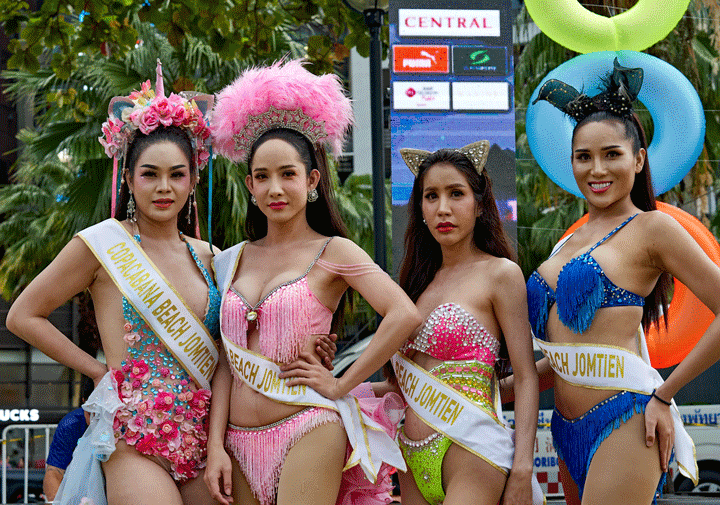
Who in Thailand about kathoey when speaking, one is not referring to a strictly defined identity. In the current Thai context, the word is often used for people who were registered as male at birth and identify as or present as female. However, the concept is broader and more culturally layered than a simple Western label. In academic and legal English, it is kathoey sometimes translated as transgender woman, sometimes as a form of third gender, and sometimes the word remains untranslated because there is no perfect one-to-one translation. That is precisely why you must be careful with generalizations. Not every kathoey experiences gender in the same way, and not everyone uses the same word for themselves.
The term has also shifted historically. Researchers point out that kathoey in the past could refer more broadly to people who deviated from the prevailing male-female divide, whereas the word later became more strongly associated with male femininity and transfemininity. This means that you cannot simply equate the concept with a fixed Western identity model. In Thai public culture, kathoey Moreover, it is regularly placed under the label of a “third gender,” but even that does not fully cover the situation. It remains a local category with its own history.
Why ladyboys are often mentioned in a tourist context
In tourist areas, on posters, in cabaret shows, in nightlife marketing, and online entertainment, you often come across the English word. ladyboy against. That word is internationally recognizable and works commercially, but it is not a neutral or precise translation of kathoeyOutside Thailand has Ladyboy often acquired an exoticizing connotation, precisely because it is strongly linked to shows, the sex industry, pornography, and tourist fantasies. Some Thai queer people use the word consciously, playfully, or proudly for themselves, but many others find it too crude, too foreign, or too closely associated with a stereotype. The safest conclusion is therefore: Ladyboy is common in a tourist context, but culturally less precise and often more loaded than kathoey.
Why kathoey are relatively visible in Thailand
This visibility has several causes. First, a recognizable cultural category for gender nonconformity has long existed in Thailand. This does not mean that there is always acceptance, but it does mean that the phenomenon can be publicly named. Second, entertainment, cabaret, beauty pageants, television, music, and later social media have kathoey made visible in the streetscape and in popular culture. Thirdly, large cities and tourist centers, such as Bangkok and Pattaya, have offered economic niches in which gender expression is sometimes punished less severely than in a more traditional local environment. Researchers studying the life histories of kathoey also link this visibility to migration from poorer regions to urban areas where there is more work, anonymity, and social space.
Religion and culture also play a role, but not in the simplistic way that tourist brochures sometimes suggest. There is no solid evidence for the popular claim that “Buddhism automatically makes Thailand tolerant.” What does emerge from research and analysis, however, is that Thai karmic and Buddhist frameworks sometimes explain gender diversity as part of fate, karma, or reincarnation. In some contexts, this can lead to an attitude of resignation or relative tolerance, but it can just as easily turn out to be stigmatizing, for example, if gender diversity is viewed as the result of negative karma from a previous life. Religion, therefore, acts here more ambiguously than liberatingly.
Visibility is not the same as acceptance
That distinction is crucial. A nationwide Thai survey by UNDP and partners showed that while many non-LGBT respondents report generally positive attitudes, significant stigma, discrimination, violence, and exclusion remained evident. In the same study, 53 percent of LGBT respondents said they had experienced verbal harassment, 42 percent said they sometimes pretended to be straight or non-trans at school, work, or home to avoid problems, 49 percent said they had considered suicide at some point, and 17 percent said they had attempted it. For trans women, the figures were even more unfavorable on several points.
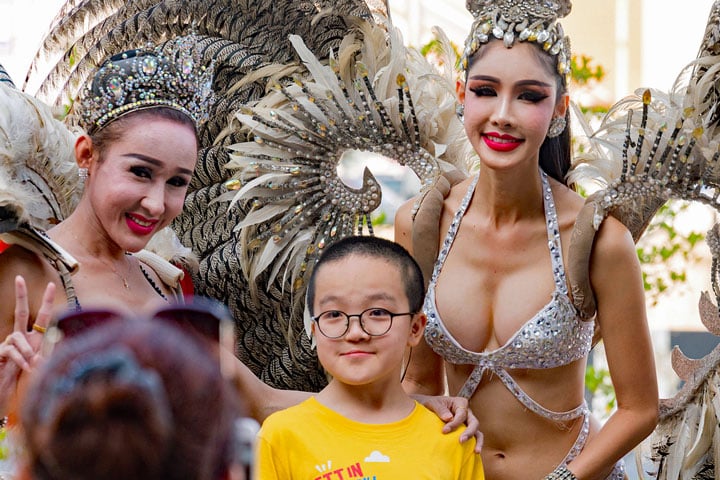
Therefore, when it comes to acceptance, one must distinguish at least five levels. There is public visibility. There is social tolerance, meaning “you are allowed to exist as long as you don’t cause too much of a nuisance.” There is personal acceptance by family, colleagues, and neighbors. There is legal recognition. And there is actual equal treatment in daily life. Thailand scores clearly higher than many countries in the region on the first level, but the gap remains large on the last two levels. This is clearly visible in the contrast between marriage and gender recognition: since January 23, 2025, marriage has been opened up to same-sex couples, yet transgender people still cannot change their legal gender through a full-fledged legal procedure.
Thailand has had a Gender Equality Act since 2015 that explicitly prohibits discrimination on the basis of gender expression. Regionally, this was progressive. However, Human Rights Watch concluded that enforcement is weak and that complaint procedures do not always lead to effective protection or sanctions. In other words: protection exists on paper, but in practice, it does not always.
What specifically do kathoey face?
The biggest structural bottlenecks are employment, education, documentation, and healthcare. Human Rights Watch and UNDP describe how trans women in Thailand are still excluded or disadvantaged in job applications, internships, exams, uniform regulations, and service provision. In the national survey, 32 percent of trans women reported discrimination in their current or most recent job. Furthermore, audit research in Southeast Asia provided direct evidence of discrimination in the recruitment and selection of trans persons, including in Thailand.
At school, too, the pressure often starts early. Previous studies and reports mention bullying, humiliation, being forced to wear inappropriate uniforms, and problems with hairstyle rules or forms of address. A UNESCO-related summary reported that more than half of LGBT students in Thailand indicated being bullied due to same-sex attraction or transgender expression. Such experiences, in turn, later impact school dropout rates, self-image, and opportunities in the labor market.
Legal documents are a persistent problem. Thai identity cards and other official papers remain linked to the gender registered at birth. As a result, appearance, name usage, and documents frequently clash. Human Rights Watch describes how this affects job applications, travel, exams, housing, and daily contact with authorities. It also sometimes leads to humiliating situations during police checks or other identity checks.
This becomes particularly visible with compulsory military service. Because registration does not legally change along with it, many trans women still have to go through a conscription procedure when they turn 21. Reuters described that call-up as a nightmare for many trans women. The problem here lies less in a single isolated rule than in the entire system of paperwork, medical examinations, and public humiliation.

Healthcare is a second major bottleneck. A recent Thai study found that 51,4 percent of surveyed trans women had experienced unfair gender-related discrimination by healthcare providers. Previously reported issues include violations of privacy, insufficient knowledge of trans care, unequal treatment, and sometimes even refusal of care. The study also reported that many participants found it difficult to find a healthcare provider who fully understands trans-specific questions, and that a lack of appropriate care can lead to people using hormones or medication without medical supervision. While the Thai government did take a step in 2025 by announcing public funding for hormone care, this does not automatically resolve the broader discrimination.
Acceptance is also unevenly distributed at home. UNDP research indicates that, on average, mothers offer support more often than fathers or other male family members. Some trans women described pressure, shame, verbal abuse, or attempts by family to “correct” them. The same sources point out that the space to live openly is usually greater in urban areas than in smaller towns or more conservative social environments. This means that the experience of a kathoey in Bangkok or Pattaya can be very different from that of someone in a village or provincial town.
Moreover, violence and intimidation remain a reality. In the national survey, 61 percent of trans women reported being laughed at or verbally abused, 22 percent sexually assaulted, 11 percent beaten, and 8 percent harassed by the police. Such figures make it clear that “you see them everywhere” is no proof of safety or equality.
Why some work in the sex industry
Nuance is particularly important here. No reliable national statistic has been found showing what percentage of all kathoey in Thailand work in the sex industry. Researchers specifically emphasize that good, representative population data on the trans population is lacking. A frequently cited estimate comes from HIV research and speaks of approximately 314.808 trans persons in Thailand, but the authors and other reports immediately add that this is not an exact national population figure. Furthermore, studies showing a relatively high number of trans women in sex work are often based on high-risk groups in specific cities and are therefore not generalizable to all kathoey.
What is reasonably well-substantiated are the mechanisms that push a portion of the group towards sex work. These include discrimination in the regular labor market, educational problems, migration from poorer regions to the city, tourism, informal networks in entertainment and nightlife, the need for quick income, remittances to family, and the costs of appearance, housing, and sometimes transitional medical care. Qualitative studies describe that some kathoey see a greater chance of income, autonomy, and a viable identity in sex work or entertainment than in a formal labor market that rejects or humiliates them. This is not a cultural fate, but a social and economic pattern.
An important figure must be read carefully. UNAIDS reported that of the estimated sex work population in Thailand in 2023, approximately 62 percent were female, 13 percent male, and 25 percent transgender. This means that transgender people constitute a significant portion of the sex work population. It does not mean that 25 percent of all trans people in Thailand engage in sex work. No solid nationwide evidence has been found to support that reversed conclusion.
Tourism plays a visible role in this, especially in entertainment districts where cabaret, bars, escorts, dating apps, and online platforms overlap. However, the tourist image is also distorted. Those who know Thailand primarily through Pattaya, Patong, cabaret posters, or pornographic platforms see an exaggerated niche rather than the daily lives of most kathoey. Outside of that commercial framework, kathoey also work in beauty salons, retail, media, education, office jobs, community-based health services, and other sectors, although access and career advancement remain unevenly distributed.

How tourism and foreign perceptions have distorted the image
The international stereotypical image of kathoey is heavily shaped by tourism, cabaret, reality TV, internet culture, and pornography. Researchers of tourism and gender write that precisely these industries have often commodified Thai transfemininity as hyper-feminine, mysterious, or erotically “different.” That image is commercially strong but socially impoverished. It reduces a diverse group of people to spectacle or fetish. As a result, the fact that many kathoey are primarily concerned with ordinary things—work, family, safety, documents, income, love, and health—fades into the background.
Online platforms have amplified this in two ways. They give kathoey more room for self-representation, visibility, and income, but can also increase the pressure to conform to a marketable image of hyperfemininity. Research into Thai online creators reveals precisely this duality: platforms can be both emancipating and exploitative at the same time.
Why some straight men are attracted to kathoey
There is much talk about this aspect, but far less solid Thailand-specific research. The safest answer is therefore limited and cautious. Scientific research, particularly outside Thailand, shows that sexual attraction, sexual identity, and sexual behavior do not always neatly coincide. Some men who identify as heterosexual are attracted to trans women because they primarily perceive them as feminine and thus link the attraction to femininity, not masculinity. Studies of men attracted to trans women also suggest that, on average, such men are usually much more focused on women than on men, although individual differences may exist.
This does not mean that a single explanation exists. Researchers cite multiple possible factors: attraction to specific forms of femininity, a sexual script in which gender presentation is more important than sex at birth, curiosity, subcultural preferences, and the fact that identity labels in real life are often messier than in theory. Conversely, other studies show that attraction to trans women can create tension for some men regarding their idea of masculinity or heterosexuality, causing relationships to remain secret or leading to shame and denial. This helps explain why visible demand and open acknowledgment do not always coincide.
For Thailand itself, the evidence is more modest. A recent study among Thai trans women showed that their relationships and sexual experiences primarily took place with men and that online apps are an important channel for meeting partners. Furthermore, qualitative research into kathoey relationships with foreign men shows that some kathoey perceive Western men as more willing to publicly display affection or partnership than Thai men. That says something about relationship culture and social recognition, but it does not prove why “the straight man” as a category is attracted. On that point, there is more interpretation than hard science in circulation.
What is most important is this: kathoey are not objects that can be explained by male desire. The existence of relationships, sexual contact, or attraction says nothing about the human dignity of kathoey and should not be used to reinforce clichés about deceit, perversion, or “hidden homosexuality.” Such frames are socially harmful and scientifically weak.

Ready to see how Snowflake works?
Kathoey is a culturally developed and socially recognizable concept in Thailand, but not a simple translation of transgender woman, third gender of queerThe word refers to a local reality with historical layers and personal differences. That is precisely why broad generalizations are misleading.
The relatively high visibility of kathoey in Thailand stems from a combination of cultural recognizability, entertainment, urban migration, tourism, media, and online platforms. However, visibility is not the same as acceptance. While Thailand demonstrates a public presence on the one hand—and marriage equality since 2025—it still lacks full legal gender recognition on the other, as well as significant discrimination in employment, education, healthcare, and contact with the government.
According to the best-substantiated sources, the fact that some kathoey end up in the sex industry is primarily due to economic pressure, inequality of opportunity, exclusion from the labor market, migration, tourism, and informal networks. Reliable national figures on the exact size of this group are lacking. What is clear, however, is that tourist zones and international perceptions have inflated this visible minority into a stereotypical image that does not correspond to the daily reality of most kathoey.
Beneath that visibility lie real vulnerabilities: bullying, violence, family conflicts, problems with identity documents, humiliation during military service, discrimination at school and work, and barriers in healthcare. The subject is therefore much more complex than the tourism industry suggests. Anyone who truly wants to understand kathoey in Thailand must look beyond the cabaret poster and the cliché of the Ladyboy Look and see how culture, economy, legislation, and inequality interlock here.
About this blogger

-
This article has been written and reviewed by the editorial team. The content is based on the author's personal experiences, opinions, and independent research. Where relevant, ChatGPT was used as a tool for writing and structuring text. We also sometimes generate photos using AI. Although the content is handled with care, it cannot be guaranteed that all information is complete, up-to-date, or error-free.
The reader is responsible for the use of the information on this website. The author accepts no liability for any damage or consequences resulting from the use of the information provided.
Read the latest articles here
 Expats and retireesApril 18, 2026Dying in Thailand without a will leads to complicated inheritance issues.
 Expats and retireesApril 18, 2026Why solar panels on your home in the Thai countryside give you more freedom (video)
 Money and financeApril 18, 2026Money, love, and care in Thailand are more often intertwined
 BackgroundApril 18, 2026Kathoey in Thailand more visible than really equal