

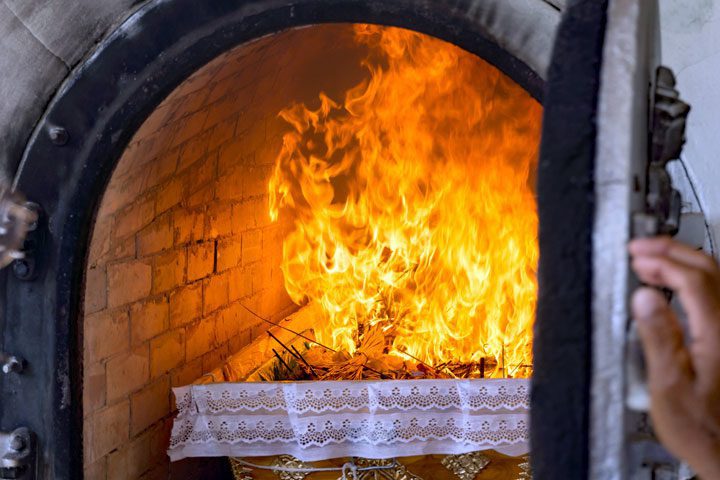
You'd rather not think about your farewell, especially if you live or spend the winter in Thailand. Yet, an unexpected death can instantly saddle your partner or friends with paperwork, decisions, and hefty bills. In Thailand, everything moves quickly, but through fixed offices and sometimes with a mandatory autopsy.
Cremation is by far the most common, usually in a temple, but burial is also possible. How much does it cost, and what official steps does your family need to take, from obtaining a death certificate to translation and legalization? This article provides an overview of price ranges and tips for arranging your burial in advance, very concretely.
What are your options in Thailand
In practice, for most expats there is a three-part series.
- Cremation in Thailand This is the standard route. Often with a ceremony in a Buddhist temple, sometimes very small and sometimes lasting several days. Even if you are Christian, families often choose cremation in a temple, with their own rituals surrounding it.
- Buried in Thailand It's possible, but it's less common and often more difficult to arrange. You need a cemetery that permits burials, plus agreements regarding burial rights and maintenance.
- Repatriateg – You have the body or ashes transported to Europe. This is usually more expensive and requires additional documentation, but some families choose this option because they want to be buried at home or because family members cannot travel to Thailand.
The official route after a death
Exactly what you need to do depends on where someone dies and whether there's any doubt about the cause of death. However, the official steps are almost always the same.
Reporting and recording
If someone dies outside of a hospital, the local police usually have to be called. In a hospital, you receive a medical confirmation of death, but that's not yet an official death certificate.
Section may be mandatory
When a non-Thai person dies, a post-mortem is often the norm in Thailand. Only in certain situations, for example, when a death occurs in a hospital with a clear cause of death, can things be different. The consequence is simple: cremation or repatriation is only permitted if the authorities determine that no further investigation is necessary.
Death certificate at the district office
The official death certificate comes from the district office; in Thailand, it's called an amphur or amphoe. Note: in practice, often only one original death certificate is issued to the person reporting the death. Obtaining additional official copies later can be difficult and time-consuming.
Letter from embassy may be required
For many nationalities, Thai authorities require a letter of authorization from the embassy before releasing the body to the next of kin. For Dutch citizens, this letter is usually also required to register the death with the amphur and obtain an official certificate.
Translation and legalization
For European institutions, you almost always need an English translation, often legalized by the Thai Ministry of Foreign Affairs. Since February 10, 2026, additional requirements apply to legalized translations: the translator must include a copy of a valid ID. This may seem minor, but it can cause delays if you're not aware of it.
Cremation, this is how it works in practice
A cremation in Thailand can be very simple, but also elaborate.
Direct and sober
Sometimes a family simply wants a cremation without a long ceremony. While that's possible, not every temple is comfortable with it. Some temples expect a minimal ritual.
With ceremony in a temple
A traditional approach involves renting a space, arranging for monks, flowers, food and drinks for visitors, and a coffin. A funeral director can oversee this, but families sometimes also arrange it with the help of a partner or friend.
What happens to the ashes
After cremation, you can keep the ashes, scatter them, place them in a temple, or take them to Europe. A boat is often arranged for scattering, especially if it takes place at sea or an estuary.
Burial is possible but not always easy
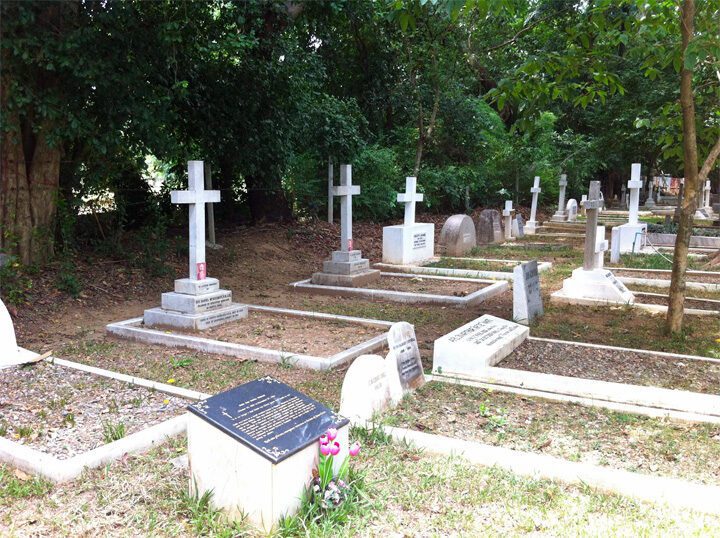
Burial is less common in Thailand and therefore often more expensive and complicated. The availability of burial space plays a role, as do cemetery regulations.
Where can it
Consider foreign or Christian cemeteries in larger cities, and some specific locations that offer plots to foreign families. A well-known example is a foreign cemetery near Chiang Mai that also offers plots to foreign nationals.
What are you facing?
- Less choice of locations than with cremation.
- Costs for burial rights and sometimes annual maintenance.
- Extra administration, especially if family in Europe also needs documents.
Some consular services therefore advise you to carefully consider whether repatriation would not be easier if you absolutely want to be buried.
Costs, with realistic price ranges
Costs are the trickiest topic, as they depend heavily on location, pace, and ceremony. However, with a few fixed costs, you can get a good idea of what you'll end up with.
Cremation, individual costs
- Temple and cremation fees: often several thousand baht for the cremation itself, plus day packages for the hall, rituals, and basic facilities.
- Monks and ceremony: donations per monk per day, depending on the setup.
- Chest: From very simple around 1.500 baht to more luxurious wood which can exceed 30.000 baht.
- Flowers: roughly 3.000 to 5.000 baht for standard, and for heavy decoration closer to 15.000 to 20.000 baht.
- • Other: urn, transport, paperwork and small costs.
Total amounts that expats often arrive at
For a funeral with approximately 50 to 100 guests, these totals are often mentioned:
- 3 days: 40.000 to 60.000 baht
- 5 days: 60.000 to 80.000 baht
- 7 days: 100.000 to 120.000 baht
- For larger groups the total can easily exceed 200.000 baht.
A concrete practical example from Pattaya shows how costs can mount up outside of the ceremony: transport of the body, autopsy, cooling and additional procedures can quickly amount to tens of thousands of baht, even before the cremation itself.
Funeral: Why It Quickly Becomes Expensive
Burials involve additional costs: burial rights, opening and closing the grave, and often annual maintenance. As a rule of thumb, cost guides list costs from 100.000 baht to 1.000.000 baht, with annual maintenance typically around 1.000 baht. However, there are also affordable exceptions, such as a full grave around 20.000 baht at a foreign cemetery in Chiang Mai. These options exist, but you need to be aware of them and arrange them in advance.
Repatriation, body or ashes
Cost estimates vary, but repatriating the body often costs around 80.000 to 100.000 baht, and repatriating the ashes alone costs around 10.000 baht. In practice, the cost can be higher due to flight scheduling, air freight, embalming, and additional documentation requirements. Consider this primarily as a starting point for a quote.
Documents for taking ashes to Europe
Anyone who wants to take the ashes to the Netherlands or Belgium almost always needs a set of paperwork. Count on this package.
- Thai death certificate of the amphur.
- English translation, often with legalization.
- Cremation certificate from the temple.
- An authorization or laissez-passer from the embassy may be required.
- Also check the airline's regulations, as these determine whether the urn can be taken in the cabin or must be placed in the hold.
Furthermore, when exporting a body or ashes from Thailand, you generally don't need to file an export declaration at customs, but you do need to present documents. This saves paperwork, but only if you have the right set with you.
Arrange in advance to make it easier for your loved ones
This is the part you'll thank yourself for later. A few simple choices can prevent a lot of stress and expense.
Record your wish
If you're unmarried and want your partner to be able to manage everything, make a will or a clear declaration of intent that can be used in Thailand. Embassies usually don't register such a wish, but they can use it after your death.
Create a folder, digital and on paper
- Copy of passport and visa.
- Contact details of family and a confidant in Thailand.
- Address of your residence and the local amphur.
- Insurance policy numbers and emergency numbers.
- A short text with your choice: cremation, burial or repatriation.
Set money aside
Even a modest cremation can quickly require a significant amount of money, often immediately. A separate savings account or insurance policy prevents those around you from having to improvise.
And finally
A funeral in Thailand is easily arranged, but your loved ones won't benefit much from undocumented good intentions. Cremation is usually the most practical and readily available option, burial is possible but requires additional preparation, and repatriation remains an alternative if your family in Europe considers it important. The most important thing is to make a decision now and record it, because at the time of the death, you don't want anyone to have to guess what you would have wanted.
Citation
• NetherlandsWorldwide, information about the death of a Dutch citizen in Thailand and required documents.
• GOV.UK, guidance on death in Thailand, death certificate, post mortem and local funeral.
• Australian Embassy Thailand, explanation of practical steps and role of funeral director.
• Department of Consular Affairs, legalization fees and update of February 10, 2026 on translation requirements.
• Thailand MICE One Stop Service, overview of legalization of translated documents and rates.
• ExpatDen, cost items and total amounts for cremation, burial and repatriation.
• Pattaya Mail, practical example with costs and steps surrounding the death of an expat.
• Abroad Funerals Thailand, examples of temple costs and cost structure for funerals and cremations.
• Thai Customs Department, procedure for export of body or ashes from Thailand.
About this blogger

-
This article has been written and reviewed by the editorial team. The content is based on the author's personal experiences, opinions, and independent research. Where relevant, AI has been used as a tool in writing and structuring text. We also sometimes generate photos using AI. Although the content is handled with care, it cannot be guaranteed that all information is complete, up-to-date, or error-free.
The reader is responsible for the use of the information on this website. The author accepts no liability for any damage or consequences resulting from the use of the information provided.
Read the latest articles here
 BackgroundMay 24, 2026The abolition of slavery drove Siamese women into prostitution en masse.
 Flight ticketsMay 24, 2026Via Istanbul to Thailand: how the Turkish hub became the smart choice
 HotelsMay 24, 2026How do Thai accommodation prices compare to Vietnam and Cambodia?
 Expats and retireesMay 24, 2026Getting a mortgage as a foreigner in Thailand: which banks participate?
Nicely detailed list editorial
I can do something with that, although I have already arranged most of it in a will through a lawyer and my girlfriend, who is also my beneficiary, and my family have already taken note of my wish to stay here in Thailand after my death.
What they do with the ashes is no longer my concern.
Will in English and Thai with a copy for the beneficiary who may also do the cremation in exchange for my bank balance in Thailand.
A list of tips and the procedure is a good idea, I still have to do that.
Any passwords and login codes should also be stored somewhere.
Belgians can now have wills made through the municipality (civil affairs) regarding burial arrangements ("last will for funeral", choice of burial/cremation, ritual of the funeral ceremony)
In addition to these, there is also the possibility of recording 2 other wills:
*1. Negative advance directive. The ability to determine which medical interventions are still permitted if one is incapacitated (coma, brain injury). Sometimes also commonly referred to as the "Do Not Resuscitate" list.
*2. Advance directive for euthanasia (in case of irreversible coma). By doing this in advance, you avoid the drama of becoming demented and therefore no longer legally capable of legal action.
Of course, one must take into account local customs and restrictions abroad.
source: www.Leif.be
I also think it is a way to prevent/avoid any disputes about this within a family circle
For me as a Dutch person, and for every Belgian, the editorial article is very valuable. Whether you're married, or if unmarried, a partner, or if single, a good friend or acquaintance, it's important to review the contents of this article together and write down what's needed and what your further wishes are.
Of course, a will (plenty has already been written about that) and set aside a sum. How does the Belgian procedure fit into this story? It's about Thailand. What should happen if you die in Thailand? Don't call the Civil Affairs Department of your last municipality of residence. So why this information as a response? It just confuses. Remember, everyone, that euthanasia is not permitted in Thailand! Dementia alone is not grounds for euthanasia in the Netherlands either. Severe physical suffering is required.
Furthermore, in Thailand, a "do not resuscitate" order is not automatically taken into account. If there's no credit card or other payment guarantee, life-saving measures are unavailable. In short: let's take the Thai situation into account and inform each other accurately.
a good informative piece.
To each his own personal wish.
I always say that if I unexpectedly close my eyes for good in Thailand, I think repatriation is nonsense.
Expenses at the funeral home, as stated in Dutch.
So thanx for the info.
Gr. Arno
There was a post about this about five years ago. I saved it because it also included the addresses of the regions, in my case, Ubon Ratchathani.
I've created a duplicate information folder (what to do in the event of a death): one is in our house in Thailand and one is in our house in Belgium. This way, my children from my first marriage, my wife, and my children now know what needs to be done when the time comes. This includes a will, advance directives, my chosen funeral plan, and a few personal messages for all my surviving relatives.
Here is the link to the previous post: https://www.thailandblog.nl/expats-en-pensionado/overlijden-in-thailand-2/
Useful article but I miss option 4
Donating your body to a university.
I definitely don't want to be buried and I have a terrible aversion to those monks who take advantage of everything.
In the Netherlands nobody is waiting for my body, so option 4!
Have you ever thought about what happens to the 'leftovers' of your body once it is no longer needed at the university?
Your remains will then be returned to your relatives and cremated.
So option 4 or not, you always pass by your beloved monks 😉
It is certainly an option, Hubert [which I also suggested to a questioner].
The university works as follows according to information.
In Thailand, a body donated to science is treated with immense respect. Donors are honorably referred to as "Ajarn Yai" (Great Teacher) because they teach students their most important lessons about the human body.
Here's what happens once the university has completed its research (usually after 1 to 2 years):
1. The Royal Cremation Ceremony
Unlike in many Western countries, where the university often handles the cremation in a sober and private manner, a Thai university (such as Chulalongkorn or Mahidol) organizes a large-scale Royal Cremation Ceremony (Royally-bestowed cremation).
Tribute: Medical students and professors are present to show their gratitude.
Religious significance: In the Buddhist tradition, donating your body is seen as one of the highest forms of merit-making (Tham Bun).
2. Cremation and Ashes
After the joint ceremony, each body is cremated individually.
Individual treatment: Although the ceremony can be collective, each donor's body is cremated separately in their own coffin (often spread across several temples if large numbers are involved).
Return to family: The university will contact the next of kin once the process is complete. The ashes and remaining bones will be collected and returned to the family.
3. Role of the survivors
Choice: The family may also choose to ask the university to scatter the ashes (for example, in a river or the sea), but the standard procedure is for the family to receive the remains for their own traditions.
Costs: The university usually covers the costs of the ceremony and cremation.
There are still two things I can't find an answer to,
Are you allowed, as a surviving relative, to take a small amount of the survivor's ashes without notifying the authorities? For example, in an amulet?
Is spreading allowed on land too? Or only on/in the water?
Dear, I am donating my body to science, what happens next? How does that work here in Thailand?
The Weghe, that doesn't happen automatically! You have to arrange something for that. I found this online:
Body donation to science in Thailand, where donors are called “Ajarn Yai” (Great Teachers), involves registering with a medical school's Department of Anatomy while alive. Major programs exist at Chulalongkorn Hospital, Mahidol University, and Khon Kaen University. The process is highly respectful, often blending education with Buddhist merit-making ceremonies.
How to Donate Your Body in Thailand
Register in Advance: You must fill out a donor form at a university anatomy department. You will receive a donor card within 1-2 months.
Requirements: Donors must be free from infectious diseases and, in some cases, meet weight requirements (eg, 40-100 kg at Khon Kaen University).
Upon Death: The next-of-kin must contact the Anatomy Department immediately. The hospital typically handles transportation within a certain radius (eg, 80km for Chulalongkorn).
Process: The body is embalmed or frozen for study over 1-3 years.
Final Rites: After study, the medical school conducts a funeral and cremation (often with Royal participation) and returns the ashes to the family.
Key Considerations
No Return: Once the body is donated and accepted, the family cannot usually reclaim it for traditional funeral rites.
Foreigners: While most programs are intended for citizens, Reddit users have indicated that registering with major university hospitals (like Chulalongkorn or Mahidol) is the best path.
Merit-Making: In Thai culture, donating your body is considered the final, highest act of merit-making, as you are helping to train future doctors.
You can start with that. Ask in a Thai hospital?
What doesn't work is what that Thai man did: he put the deceased in the trunk of his car and drove to a hospital. "I have something for you..." That doesn't work; after all, he could have left the deceased at a temple, and they cremated it properly.
I still have a question:
I am on holiday in Thailand alone (without a partner or friends).
Of course I didn't arrange anything in Thailand.
Suddenly I die.
Who should take action then? Of course, the home country doesn't know anything yet.
Does the police then go to the embassy or is there a special procedure for that as well?
Greetings, Joop
Thai authorities inform embassy
Does a Dutch person die in a Thai hospital?
The Thai authorities then report the death to the Dutch embassy.
This also happens if a Dutch person dies in Thailand as a result of a crime or accident.
The Thai authorities ask the embassy for an authorization letter.
It states to whom they may transfer the body.
You can also read the rest here
https://www.nederlandwereldwijd.nl/overlijden-buitenland/thailand
This post got me thinking, to leave some information for my Th acquaintances regarding addresses and phone numbers in case I pass away unexpectedly.
as with me to the Netherlands
My Chaantje was eulogized in August and cremated according to Buddhist custom.
And we left many of her bones in the catacomb of 'our' temple.
When I go back to the Netherlands, I will definitely take some of her bones with me.
But I plan to just take them with my luggage, in the cheesecloth the head monk has wrapped them in.
ps:
Years ago, my sister also took her deceased husband's ashes from South Africa as hand luggage.
My husband died on January 8th in Huahin. He died at the Sports Center. Arie was transferred to the Temple on January 12th.
Our family had come over, and we used the farewell party room for three days. We were given complete freedom to plan the ceremony as we pleased. There was no time limit.
We also took Arie to the oven ourselves.
A very sad experience. Arie's wish, if he died in Huahin, was to stay there.
We had to pay 6000 bath to the temple and we made 12000 bath out of it..
Obviously not a party room!!