

The phu yai job (village chief) in Thailand
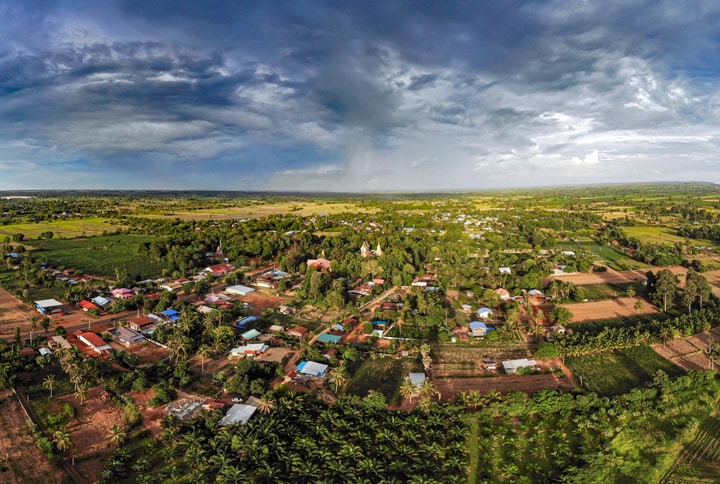
Village in rural Thailand
Every village in Thailand has a village chief, if the village is a bit bigger even several. It is an official position, but the lowest in rank in the Thai administrative organization.
The village chief is elected by the inhabitants for a period of 5 years, which can be extended. In practice, many village chiefs continue until retirement. The periodic election of a sitting village chief or a successor is done in a typical Thai way, in which votes are bought by candidates. The appointment is confirmed by the Ministry of the Interior.
The village head is there for the general well-being of the population. He listens to the wishes regarding, for example, traffic situations, mediates in neighbor disputes, helps people with all kinds of government formalities, gives advice on construction activities, ensures that certain government measures are announced, organizes local festivals, and is often the first point of contact in the event of traffic accidents. In short, he is often involved in everything that happens in his community.
It is a position with status, people respect him and his advice, but his reward is very small. I hear amounts of 6 to 8 thousand per month and that means that he must have a job on the side. His advice is not binding, but is generally listened to. It is better to have a village chief as a friend and occasionally give him some money or invite him for a snack and (especially) a drink.
In stories on the internet, in which the village chief is mentioned, he often comes across as an authoritarian figure, corrupt and often drinks too much. On Wikipedia I read that there are more than 80.000 village chiefs. My wife's family wants nothing to do with the phu yai job: “If there is something to arrange, we will do it ourselves”.
So a negative image, but the opposite is very possible. I found a nice story about a village chief in northern Thailand, which you can read here: https://expatlifeinthailand.com/uncategorised/the-poo-yai-baan-in-our-village
I am curious if there are blog readers who have experience with a phu jai job in the village where they live or stay with their Thai partner?
About this blogger

-
Bert Gringhuis (1945), born and raised in Almelo in the beautiful Twente. Later lived for many years in Amsterdam and Alkmaar, working in export for various companies. I first came to Thailand in 1980 and immediately fell in love with the country. Been back many times since then and moved to Thailand after my (early) retirement as a widower. I have been living there for 22 years now with my somewhat younger Thai lady Poopae.
My first experiences in Thailand as a kind of newsletter sent to family, friends and acquaintances, which later appeared under the name Gringo on Thailandblog. Many, many articles followed those first stories and that has grown into an almost daily hobby.
In the Netherlands still an avid footballer and football referee, but the years are starting to tell and in Thailand still avid, but the pool billiards is really of inferior quality, ha ha!
Read the latest articles here
 Background6 Januari 2026Pineapple in Thailand
 Korat29 December 2025Nakhon Ratchasima: Gateway of Isan
 Background13 December 2025The history of Thai cuisine
 ActivitiesOctober 28, 2025High altitude mountain hiking in Thailand
Coincidentally, I had a piece about village democracy last week. From that, the village chief has evolved from something very democratic, of, for and by the people in his own community, into a function in which central and distant Bangkok has become involved. Think of the internal colonization and imposition of the will of Bangkok on the people who for many generations had nothing to do with the distant capital. Until the period with Sarit, those central figures in Bangkok were a far from my bed show. Anyway, with that involvement from Bangkok, that democratic aspect has been damaged quite a bit, so I understand that there are villages where the village chief (ผู้ใหญ่บ้าน, Phôe yài bâan) is not idolized.
I don't know much about buying votes at the local level. Nationally it is actually nothing, where that happens it is more for show and not determining who people vote for. Could this also be the case at a local level? Giving a gift is part of showing your generosity and involvement, but if a candidate participates who people think “he is really going to do something for us”, then there is little point in scattering some money. Unless all candidates are poor, trump… If you can expect 0,0 from your elected representative, then a sponsored party or a few bills of money is the only little bit that such a person wants to mean to you…
And that reward of about 10 thousand baht? No fat pot, but not super scanty either? Such an income is quite normal for an average employee without good papers, if you have a University degree you can start counting from 20 thousand baht. If you have a good education then it is indeed better to do something else, but if you are also just a simple worker or farmer with only a high school diploma, the compensation is not very bad compared to other positions. Although I would argue for a decent (read: more) wage, safety net and so on for all citizens. Incomes are quite skewed, and especially in Thailand. So in that respect: yes, the average Thai comes off scanty and miserable.
But to form a bit of an idea, I would actually have to see some interviews somewhere with say about 10 village chiefs here and there in the country and a number of conversations with the people in those villages to get an idea of how to appreciate all this exactly. .
The village democracy:
- https://www.thailandblog.nl/achtergrond/thaise-democratie-van-historische-dorpscultuur-naar-een-hybride-thais-westers-model/
Very relatable article and response. Here in a village of about 400 people. Bought votes, hides, his 2 right hands do what they want, he drags himself from funeral to funeral to play casino, drink and drugs are not strange either. Respect, far from it. 1 x needed his service to get my yellow book. Apparently impossible because we didn't want to hide anything. No, the man has no substance and no soul. He doesn't help people in the village, but here they still fall for the bribed vote of 1000 baht, whoever it may be.
And why do they do it : prestige and awe, fixed monthly salary, health insurance/hospitalization for the entire offspring, pension!
But there are undoubtedly village chiefs with integrity.
With us in the village of 700 houses I know the Phu Yai Baan very well before that mayor was regularly with us because he is the local Satalite Mechanic and installer.
A very nice man and chosen Phu Yai Baan himself was not allowed to vote 5555 but my wife was and is still a Satalite mechanic, but often hear him say something about corona now Omicron through the village speaker.
More information ันจากเดิม 10,000 เป็น 15,000 บาท ผู้ใหญ่บ้านจากเดิม 8,000 ขยับเป็น 13,000 บาท พร้อมกับตำแหน่งอื่นด้วยตาม More information ้รับ
It says that the monthly allowance for a kamnan (head of a sub-district) in 2020 went from 10.000 to 15.000 and that of a village chief from 8.000 to 13.000 baht, 50% more.
My ex-father-in-law was village chief for many years. In an election about 2005 he lost. That led to a brawl with the winning (and very wealthy) candidate.
I think it very much depends on the personality of the village chief.
In my village you have 8 men and women.
That ranges from a very cultured man with a contracting company who works hard in both functions to a scumbag who does nothing but hang around all day hoping for booze and a tip. And everything in between, of course.
Dear people,
Take a look at how things work in our village.
Our village has 6 moo. So the village has 6 phu jai lane which is elected and according to the latest rules may remain until the age of 60 years. It can be dropped off if the phu jai lane is not functioning properly. The phu jai job itself appoints 2 assistants.
The phu jai track is thus the head of a moo track. The village chief or mayor of the village is called Kamnan and is therefore head of the phu jai track.
Buying votes is absolutely forbidden under penalty of exclusion. Any other form of winning votes is also out of the question, such as parties and other concessions. However, notifications will not happen quickly because both the candidate and persons of the purchased votes will be excluded / fined. But there are devious ways to mask ee.
Candidates for a position are informed about what is and what is not allowed through meetings and video presentations.
My wife participated in the last elections not as a phu jai vaan but as an employee for our moo in the function of mouthpiece between the people in the moo and the town hall. With the same topics as mentioned in the article. She does not work for the phu jai job but directly with the town hall. The appointment is 4 years. Yes, she has been chosen, perhaps people expect something extra if a foreigner is involved.
The old members wanted to keep this job because they receive 7500 baht every month which is a nice addition to the monthly income and are chosen with a lot of family in a nice January best to work in your favor
Until then, kind regards
Lung kees
The village chief in our village is a good friend of mine, 35 years old and a university degree (got in Egypt). He is an exception, most Puyai's are usually older and often low-skilled, but with the thickest wallet to buy votes. There has been criticism from the Thai community for years about the pay of Puyai jobs in Thailand, compared to the wages of Obotor's. The Nayok Obotor of our Tambon is a good acquaintance, wealthy from home and now uses his power as Nayok Obotor to increase his "empire"! Politics in Thailand, Well, it's best not to worry too much about that. The corruption among the Obotors is striking. I live in Nakhon Si Thammarat, a province with quite a notorious past of mafia, hitmen Etc……. 2 years ago an Obotor from a nearby town had another contractor and his wife (construction new road) taken out by a hitman in pure gangster style, Reason: contractor came up with too little money (bribes)
The village chief in our moobaan comes from a family of rice farmers. Their wealth is in the soil of their rice fields. He studied architecture in Bangkok and speaks a little English. Yet he prefers the simple farm life in a small northern Thai village.
He is a social drinker, not a drunk. He and his family are wealthy enough to allow him to rise above and beyond the percentage fiddling of the corruption pyramid.
He cares for the community and acts wisely and justly.
He gauges the needs of the moobaan by talking to the people. From time to time he drops by to have a chat with the only farrang in his moo lane. He recently asked my thoughts on planned dike and road works along the Nan River.
He has become popular in a short time because many people believe that he does the right things for the community.
The previous village chief was voted out despite his costly high profile and vociferous campaign. During the campaign he threw money. Except for his own “clan,” most people wanted him gone because he took every opportunity while in office to generously serve himself and his clan. The result was that the public interest was neglected. Most people in the village realized this and voted for the relatively young alternative candidate.
Beforehand, few gave this young alternative candidate a chance to be elected because he was much less wealthy and still had limited status. Yet grassroots democracy did its job…
In the neighboring moobaan, the village chief is an earthworker. His company is now tossing up the entire area… grand public works paid for with taxpayers' money. No one can explain usefulness and necessity, but the money rolls smoothly in his direction. Waiting to see if he will be re-elected…
You could say that with a phu jai job, democracy is very strong in Thailand.
Very small communities are also part of it with their own representative.
The office of village chief can be seen as a stepping stone to basic democracy. For that, it must be caring for the entire community of morality or be the driving force.
Unfortunately, the pay is extremely low for such an important position, making conflicts of interest very often temptingly lurking around the corner. All the more so because the percentage pyramids are all structurally present in Thai society.
Not only the farrang who is harassed by the brown men to pay an alleged fine without a ticket suffers from this. The ordinary working Thai also feels this scourge.
A village chief with a sense of community and justice also mitigates the plague of corruption. He or she must be very handy and sensible.
Our village head also keeps track of mutual agreements and agreements between villagers, which usually also involve an advisory body in advance, to prevent unsustainable situations from arising later, about things such as borrowing important goods and/or money from land.
As t is a very respected person, the agreements promised in his presence are in most cases respected and if for some reason this cannot be done under his supervision and advice.
So far no fights or worse experienced here, maybe we have a village chief as it was (ever) intended.
Regards Eric
Here was the election of the obortor recently. Both for low level (per street) and sub district level.
A lot of commotion beforehand with posters, sound trucks and parades.
The neighbor has been an obortor for the atrate for several years now. He takes care of the old people's benefits, if maintenance is needed somewhere, etc. This year was quite exciting because another family member was also a candidate. It's all about prestige and income.
The elections are always a nice circus when the votes are counted and displayed on a large board for everyone to see. Often the difference is very small.
The village chief (whom I actually didn't know) came as a witness when immigration came to check extension visas. He just came off the land.
And of course the announcements early in the morning.
The Phu Yai Bahn exists in all major Jangwats too. Also here in Bangkok.
His power is limited, but everyone treats him with respect. Part time job.
Above that comes the Kamnan and above that the Oppoto.
Full-time jobs.
The latter is rich in money, drives expensive cars and has a few mia nois.
Has a life like a louse on a very head!
My neighbour's father, Professor Gobelijn, has worked here in the village where I live for many years and was adored by the population.
The head of the Ampheu, however, you can't do anything with that here. If I need something, eg stamping my life certificate, then I go to the tessa job of the tambon where I live. No problem at all to have my life certificate stamped by the Poejaai Baan. Like everywhere: there are good, less good and bad people.
The head of the Tessabaan is not a Pujaai job, the boss of the Tessabaan is on a higher level but also has a higher reputation.
And then comes the head of the Amphur say the mayor of it all.
In addition, both the Moo job boss and the Tessa job boss are not allowed to issue a life certificate.
That only goes through the town hall, so the local Amphur
But yes, both in Holland and Belgium, pension funds, etc. have no idea how things work in Thailand.
The local pop and mom shop could also sign with a nice homemade stamp.
Jan Beute.
Dear Jan,
I know very well what you write about the fact that the head of the 'Tessabaan' is not a fuss job. But I wanted to keep it simple in my response. The reason why the chief of the Ampheu did not want to stamp and sign was: he could not read English and wanted me to have that document translated into Thai first, which is his full right. However, this would have entailed a lot of administration: translating into Thai, legalizing. Then I have a Thai document and they can't read it in Belgium. Have this translated from Thai to English and legalized…. are you doing well.
For us Belgians, there is no problem with a life certificate: they accept the stamp and signature of ANY public service: police, hospital…. with us that should not be from the SVB because we don't even have that here in Thailand. So I just go to the tessa track here. Whether that 'chief' is called a shit job or something else, I don't care if I have my stamp.
Hi Gringo,
We as "die hard Thailand goers" know that Thailand has an exception to every rule.
Every village and every municipality is different. That's because we Westerners come from an organized society. And so the country is divided into provinces, municipalities and villages. We tend to translate this organization into Thai. After all, you also have a kind of structure here.
Translated to Dutch concepts
Chamwat = province
Amphur (or Keet in the "Bangkok province") = municipality
where Muang is the largest Amphur in the province. In Dutch, it is the provincial capital.
Tambon is a sub-district of an Amphur. you can think of it as a village.
Moo is a number of houses together, you can compare that in the Netherlands as a hamlet.
And in Thailand (which considers itself a democracy) people are of course needed to manage (and keep an eye on) things.
But here you have government officials and you have elected officials.
They sometimes have different names. That depends on the province and even within the province they can differ.
Noted from below,
Poejaibaan (not to be confused with the pajabaan (nurse)
This position is both elected and civil servant.
1. The chosen Pujai job is eligible for re-election after 4 or 5 years. If he/she is not re-elected, he/she will lose her (meaning) income.
2, the appointed Pujaibaan is employed by the Amphur. and if nothing crazy happens, he/she will retire at 60 (he/she is paid by the Amphur). The salary depends on his/her position and/or education.
The obot. Is an elected official. Usually he is the jack of all trades of the larger moos or of a number of moos. He sometimes has one or more (chosen) pujaibaans at his/her disposal.
Depending on the province (different throughout Thailand), a sub-district is headed by two people. the elected Nayok and the appointed Kamnang.
1. The elected Nayok must be re-elected every new election. But has a lot of influence on everything. He is highly regarded and usually has a lot of money. (there is a hint of how he/she got that money with every Nayok). He is paid by the Amphur. But he will lose the income if he is not re-elected. The Nayok does not build up a pension.
2 The Kamnang is appointed by the Amphur and is paid by the Amphur. The Kamnang builds up a pension and he/she is not without resources among the pensioners.
That's about the elected. Among the Amphur's and the Chamwat's you also have many civil servants.
Also here the names “Poejaibaan” “Kamnang” “Nayok” are encountered.
The Thai is crazy about uniforms. For us westerners that is strange, but here it applies that if you wear a uniform you mean something and you are not a poor slob. However, the Thai sees from the uniform whether you are an elected official or an appointed one. The appointed officials are held in higher esteem.
For us Westerners, the difference lies in the distinguishing marks. If the epaulettes are black (or green) then those are the appointed officials.
For us Westerners there is only one way to get something done and that is to behave as a guest towards an official (elected or appointed). Then you get the most done. At least that's what I learned as a 16-year-old resident of this beautiful country in terms of manners.
I have gained this knowledge from my own circle of acquaintances of Oboto's, Poejaibanen, Nayok's and Kamnangen
.