
Buying medicines without a prescription in Thailand is convenient but not without risks
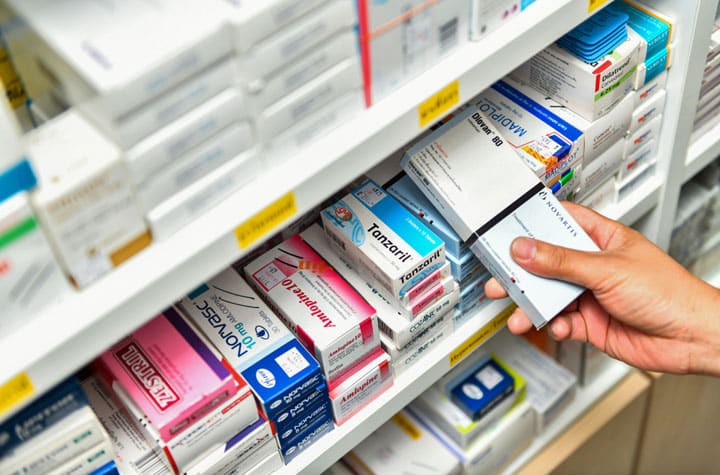
In Thailand you can buy medicines without a prescription that in the Netherlands are only available through your GP. That sounds like an advantage, especially for travellers who need something quickly or expats who are used to regular repeat medication. But behind that convenience also lies a risk.
Self-medication seems harmless, but without proper guidance it is easy to misjudge symptoms or use remedies incorrectly. Moreover, Thailand plays an important role in the global discussion on antibiotic resistance.
In this text you can read how the system works, what you can expect in the pharmacy and what you should pay attention to.
How the system works in Thailand
Medicines in Thailand are divided into four main groups:
- Commonly available resources such as paracetamol and cough syrup.
- Dangerous drugs, including some antibiotics and blood pressure lowering drugs.
- Controlled medicines such as strong painkillers or sleeping pills, these usually require a prescription.
- Narcotic or psychotropic drugs, which are subject to strict legislation.
Pharmacists are allowed to dispense so-called 'dangerous medicines' without a prescription, but are obliged to give advice. In practice, this does not always happen, certainly not in busy or tourist areas.

Why are medicines so easily available?
In Thailand, pharmacies are the first point of contact for many people with health problems. This applies to people in rural areas as well as those with little money. The government accepts this partly to relieve the pressure on the health care system. Tourists also benefit from the easy access to medicines. For many people, it is fast, affordable and accessible.
What are the benefits of over-the-counter medications?
Fast and cheap help with minor complaints
You don't have to make an appointment or wait for hours. For simple ailments such as sore throat, diarrhea or headache you can get a remedy immediately. This saves time and money.
Repeat prescriptions without detours
Think of an expat with high blood pressure who needs medication every month. In Thailand he can go to the pharmacy without any hassle, without having to visit a doctor every time.
Medicine prices are low
Many medicines are cheaper in Thailand than in Western countries. This makes it attractive to purchase certain medicines during your stay, such as stomach tablets or allergy medication.

The downside: what are the risks?
Antibiotic resistance
In Thailand, antibiotics are still often used without medical diagnosis. Many people take these drugs against viral infections such as colds, for which antibiotics do not work at all. This accelerates the worldwide rise of resistant bacteria, which can have serious consequences for public health.
Incorrect dosage or wrong diagnosis
Without professional advice, it is difficult to properly assess a complaint. What starts as a simple sore throat can be the beginning of pneumonia. If you only take a painkiller, you mask the symptoms and run the risk of worsening.
Resources of dubious quality
Not all pharmacies are equally reliable. In tourist areas or at markets, counterfeit or incorrectly stored medicines can turn up. These are less effective or even dangerous.
Side effects and adverse interactions
Anyone who combines medications themselves, without insight into the risks, may experience side effects. Think of a blood thinner in combination with herbal preparations, which increases the risk of internal bleeding.
Self-medication in figures: what does research show?
A 2021 study published in the Journal of Primary Care & Community Health shows that 47% of people who self-medicated in Thailand eventually needed medical help. The symptoms did not go away or got worse. Another study showed that 88% of respondents thought they knew which medicine they needed, while only 37% had the correct knowledge about how to use it.
This indicates a persistent overestimation of one's own knowledge and a high risk of misuse.

What can you do yourself?
Anyone who wants to buy medicines in Thailand would do well to:
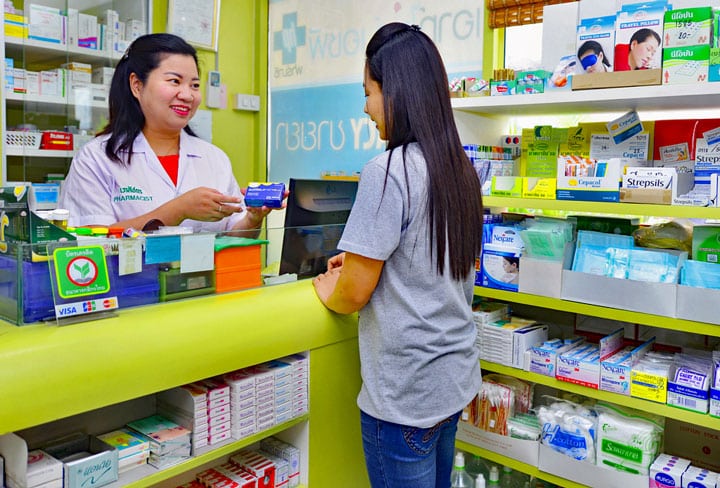
- Only available from authorized pharmacies (recognizable by the green cross).
- Always ask a pharmacist for advice.
- Read the package inserts or labels carefully and ask for clarification if you do not understand something.
- Do not use antibiotics without a medical diagnosis.
- If complaints persist or are serious, consult a doctor.
Finally, convenience is not a substitute for care
Over-the-counter medications offer a lot of convenience, especially for travelers and expats. But self-care is no substitute for medical supervision. The risks of misuse are real, and can have serious long-term consequences, for yourself and for society.
So feel free to buy a painkiller or anti-diarrhea medication at the pharmacy, but if in doubt, always sound the alarm. Especially in the case of fever, shortness of breath or recurring complaints, medical check-up is important. In Thailand, first aid is never far away.
Sources:
- World Health Organization (WHO) - Antimicrobial resistance: global report on surveillance 2014
➤ Describes the contribution of self-medication with antibiotics to antibiotic resistance, with specific attention to Southeast Asia, including Thailand.
[Source: World Health Organization, 2014] - Ministry of Public Health Thailand - Classification of Drugs According to Law
➤ Provides an overview of the four drug groups in Thailand and the conditions for non-prescription sales.
[Source: Thai Food and Drug Administration, part of the Ministry of Public Health of Thailand] - Chongtrakul, P., & Sumpradit, N. (2012) - Antibiotic use and resistance in Thailand: situation and policy direction
➤ Discusses the overuse of antibiotics in Thailand and its impact on resistance.
[Source: South East Asia Journal of Public Health, WHO Regional Office for South-East Asia] - Sawatwong, P. et al. (2021) - Prevalence and factors associated with self-medication in Thailand: a cross-sectional study
➤ Shows that 47% of self-medicating participants still had to seek medical help.
[Source: Journal of Primary Care & Community Health2021] - Boonkird, K. (2019) - Understanding community pharmacy practice in Thailand
➤ Research into the role of pharmacies, access to medicines and consumer behaviour.
[Source: International Journal of Pharmacy Practice2019] - ExpatDen - How to Use a Pharmacy in Thailand
➤ Practical explanation of how pharmacies work in Thailand, including regulations and advice for foreigners.
[Source: ExpatDen.com, 2024] - Biomed Central Public Health - Public knowledge and attitudes toward antibiotic use and resistance in Thailand: a national household survey
➤ This study found that 88% thought they knew what medicine they needed, while only 37% had correct knowledge.
[Source: BMC Public Health, 2019]
I would say download the app Farmacotherapeutisch Kompas (compiled by Zorginstituut Nederland) this app offers reliable, up-to-date information about medicines and their correct use. Not intended for self-medication, but to find quick and clear advice.
Not everyone is an idiot, this article mentions exactly that of the pharma industry that partly led to Corona idiocy. I have lived here for 7 years now and do not see that kind of stupidity more than NLD. Yes doctors often prescribe a lot and good medicines but they do work. In NLD you get a paracetamol after abdominal surgery. I speak from experience in NLD and Thailand.
For tourists I would say:
If in doubt, visit a Thai general practitioner.
A doctor's visit + prescription costs a fraction of what you would pay in the Netherlands for a doctor + prescription + pharmacy.
There are only a few general practitioners with their own clinic in Phuket.
Many now practice in hospitals here. You can just walk in without an appointment.
Remember: medicines dispensed by a hospital pharmacy are more expensive than going to a pharmacy outside the hospital with a doctor's prescription.
If you are going on holiday (+ medication) to Thailand from the Netherlands and want to buy follow-up medication in a pharmacy here, for example during an extension of your stay, show the pharmacist your Dutch medication packaging.
Then you will safely receive what you want, even if it is sometimes from a different brand.
But switching brands is also common practice in Dutch pharmacies these days.
(sometimes patients complain about this).
You can also ask your GP in the Netherlands for advice about any possible
buy the same/similar medicine in a Thai pharmacy.
Read for yourself in Google what antibiotics do NOT work for, then you will not buy them for symptoms for which antibiotics do not work.
In Thailand they are very quick to recommend antibiotics, although this is now changing.
The wrong thinking/idea, 'if it doesn't help, it doesn't hurt' is already strongly in retreat here.
Here too, people are now aware of resistance problems.
For us who live semi-permanently in Thailand;
We know how to take the healthy/safe path of medicine.
As a heart patient I am very happy with the simplicity of repeat prescriptions. 25 years ago I had my first heart attack and I was told then: keep taking this and that for the rest of your life. The lab is also available without a referral so you can have your blood tested yourself without too many extra costs. I order my medicines online from a recognized pharmacy and in the 13 years that I have lived here I have never had any problems.
Of course, if I feel or notice something that deviates from my daily routine, I make an appointment with my cardiologist. He assesses each time whether the medication is still applicable, whether there are improved alternatives or whether the dosage needs to be adjusted. In any case, I visit him every year, an appointment is easily made and the costs are not.
Package inserts… Yes, but even in the most renowned hospitals in Thailand you almost have to beg for them. You get your medicine in a colored plastic bag with a sticker about how often, when, how to take it and what the pill represents. Rarely do you get the medicine in the original packaging. So always ask for the package insert or if not, consult the Farmacotherapeutisch Kompas.