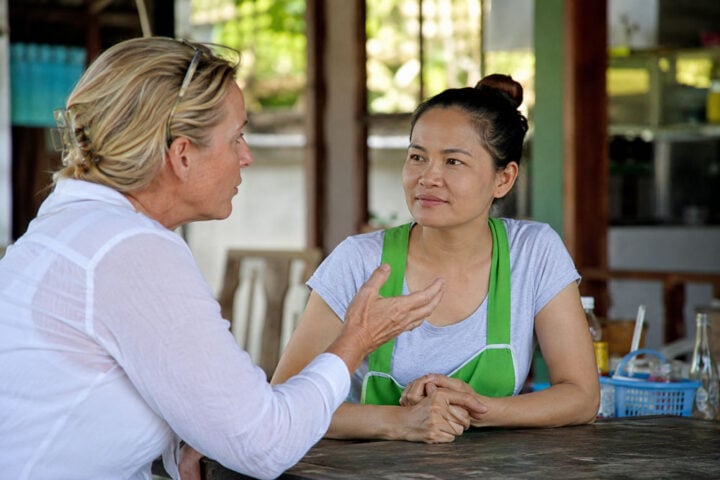
Moving to Thailand or staying there for an extended period means more than just getting used to the heat, food, and traffic. The biggest adjustment lies in something you don't see at first: the way people interact with each other. What is considered honest and efficient in the Netherlands is often met with disapproval in Thailand.
The good news is that you don't have to transform yourself into a different person. You only need to learn where to make adjustments: in tone, tempo, and timing. That is a matter of practice and observation, and it will earn you a lot of goodwill.
The core of the difference
The Netherlands and Thailand sit at virtually opposite ends of a few important cultural axes. The Netherlands scores high on individualism and directness, with a low power distance. Thailand is the mirror image: collectivist, indirect, with a strong hierarchy in which age, status, and relationships carry more weight than the literal content of a conversation.
That explains why a perfectly normal Dutch remark like “that isn’t right, that needs to be done differently” can come across as a personal attack in Thailand. And why a Thai “might be difficult” often actually means: forget about it. Those who do not learn to read these codes will continue talking past each other without realizing it.
Time, directness and confrontation
You count in minutes, the average Thai in half-days. An appointment at two o'clock can in practice become half past two, certainly outside business circles in Bangkok. Traffic, rain, or an unexpected family visit are legitimate reasons, not excuses. Getting angry gets you nowhere, except for a loss of face on both sides.
The same applies to criticism. A Thai conversation partner who disagrees rarely says a blunt “no.” He remains silent, smiles, or says “maybe.” Moreover, becoming visibly angry is considered a lack of self-control and costs you serious respect. Whoever shouts has lost the argument, regardless of whether they are right. In the Netherlands, you can turn red in the face at a meeting and it will be forgotten by tomorrow. Not in Thailand.
Gezicht, kreng jai en mai pen rai
Three concepts drive virtually every social interaction in Thailand:
- After (face): Social dignity within the group. Correcting someone in front of others, openly questioning an explanation, or letting it be known that you catch someone making a mistake costs the other person face and you the relationship.
- Kreng jai: A kind of consideration where you do not want to burden or embarrass the other person. Therefore, a Thai person often does not ask for help, does not say "no," and hides bad news.
- Mai pen rai: Literally “it doesn’t matter”, but in practice an entire attitude to life of putting things into perspective and accepting what you cannot change.
And then there is the smile. In Thailand, it has dozens of meanings: joy, apology, embarrassment, irritation, or discomfort. So, a smile does not automatically mean that everything is fine. Sometimes, it actually means that someone is at a loss as to how to handle the situation.
How to adjust your posture
Adapting starts with your tone and pace. Speak calmly, smile, and pause. Use indirect approaches to criticism: not “this isn’t right,” but “maybe I’m misunderstanding; could you explain it to me again?” Never ask “yes or no” when it comes to something; open questions yield much better results. If you feel taken advantage of, walk away for a moment, drink some water, and come back later.
Additionally, respect the hierarchy. Address elders with “khun” followed by their first name, perform a light wai when greeting someone older or in a higher position, and never touch anyone's head, not even as a joke or with children. Keep your feet down: pointing your feet at someone or a Buddha statue is considered rude. Taking off your shoes indoors is self-evident.
Common mistakes and what works
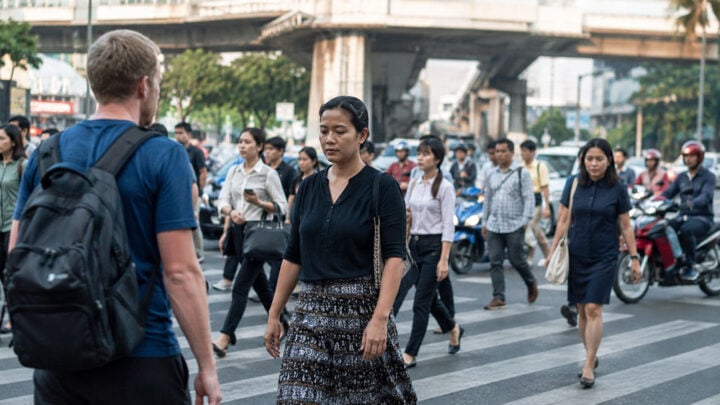
The classic pitfalls for Dutch people in Thailand are recognizable:
- “I just want to know where I stand” clashes head-on with bitch jai. The more you insist, the more you hear what you want to hear.
- Reprimanding your Thai partner or staff in front of others makes you socially smaller, not stronger.
- Noisily scrutinizing the bill in a restaurant results in significant loss of face for very little money.
- Expecting appointments to be set in stone doesn't work; politely confirm the day before.
- “That’s how we do it in the Netherlands” never works, neither as an argument nor as a joke.
What does work: learn a handful of Thai words like sawasdee (Hello), khop khun (Thank you), khor thot (Sorry), mai pen rai en aroi (Nice). Smile as standard, even at the security guard and the cashier. Small talk first, then business. Give face instead of taking it: compliments, public appreciation, and small gestures smooth out social interactions much more than in the Netherlands.
Regional nuance
Cultural descriptions are always generalizations. Bangkok is more international, younger, and more direct than the countryside in Isaan or the Deep South. Younger Thais who have studied abroad often communicate much more directly. Work environments at international companies are closer to Dutch standards than family businesses or government offices. What is stated above is the pattern, not the law. The longer you are in Thailand, the better you learn where the exceptions lie and how to adapt to each situation.
Ready to see how Snowflake works?
Adapting to Thai culture does not mean abandoning your Dutch character. You soften your tone, slow your pace, deflect criticism, and keep your anger to yourself. Those who do so receive warmth and hospitality in return. Those who do not fight a wall of smiles throughout their entire stay. In the Netherlands, you win with your words; in Thailand, with your attitude.
Source: Thailandblog editors, based on Hofstede Insights and general intercultural literature on Thailand
About this blogger

-
This article has been written and reviewed by the editorial team. The content is based on the author's personal experiences, opinions, and independent research. Where relevant, ChatGPT was used as a tool for writing and structuring text. We also sometimes generate photos using AI. Although the content is handled with care, it cannot be guaranteed that all information is complete, up-to-date, or error-free.
The reader is responsible for the use of the information on this website. The author accepts no liability for any damage or consequences resulting from the use of the information provided.
Read the latest articles here
 News from ThailandMay 16, 2026Bus and train collide in Bangkok, at least eight dead (video)
 OrganizationsMay 16, 2026A relationship with a much younger Thai woman: does that work, or are you asking for trouble?
 Expats and retireesMay 16, 2026Second medical opinion in Thailand: how to avoid an unnecessary operation
 Expats and retireesMay 16, 2026Noise pollution in Thailand: how to really turn the Public Health Act to your advantage