

Is Vietnam an alternative to Thailand in the winter?
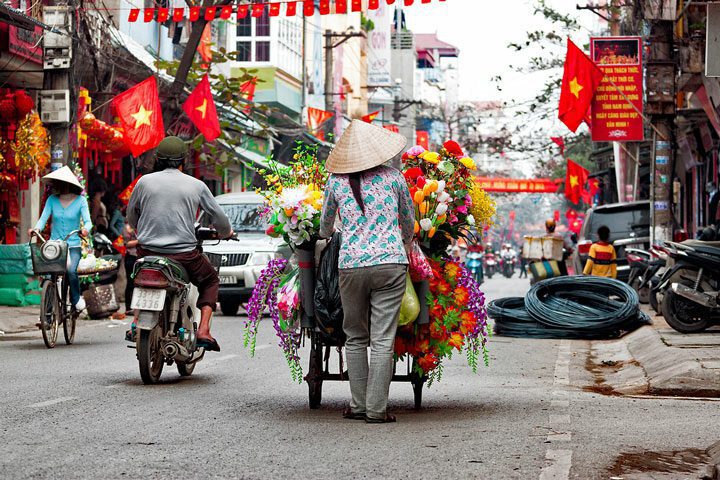
Thailand has been the go-to choice for years for Dutch and Belgians traveling to Southeast Asia in the winter. However, Vietnam is rapidly emerging as a serious alternative. The country is often cheaper, has more flexible access for stays of up to ninety days, and offers a great deal of variety between city, coast, and nature.r.
However, cheaper is not automatically better. For holidaymakers, flights, climate, atmosphere, and crowds also matter. For winter visitors, healthcare, visa regulations, internet access, transport, and daily livability often carry more weight. It is precisely on these points that Thailand and Vietnam turn out to be less alike than travelers think, especially for stays of months.
Visa, climate, and accessibility determine the first choice
Looking purely at the facts, Vietnam is in a stronger position than many travelers think. Since August 15, 2025, Dutch and Belgian citizens have been allowed to enter Vietnam visa-free for up to 45 days. Additionally, there is an e-visa for up to 90 days, for single or multiple entry, with official fees of 25 and 50 dollars. For a winter of two to three months, this is practical and straightforward. Thailand remains more flexible for those wishing to stay longer. There, a 60-day visa-free period still applies, which can also be extended by 30 days, plus routes such as the DTV for remote workers and 90-day Non-immigrant pension visas for those over 50. However, there is open discussion in Thailand about a possible tightening of the generous 60-day visa-free period, potentially shortening it to 30 days.
Thailand is easier to plan for winter sun. For many destinations, the dry and cooler season aligns better with the European winter, although the Gulf Coast and the Andaman Coast differ. Vietnam requires more regional knowledge. Hanoi can be chilly and grey in winter, central Vietnam has a different rainy season, and the south makes the most sense for many winter visitors. Thailand also has an advantage in terms of accessibility. Bangkok is generally easier to reach from the Netherlands and Belgium, and often more direct. For Hanoi and Ho Chi Minh City, return fares from roughly 470 to 635 euros are realistic, but often indirect and more dependent on season and route.

Atmosphere, living environment, and tourist pressure differ more than you think
In practice, Thailand feels more international and smoothly organized in many places. This is evident in the range of hotels, transport, shopping centers, hospitals, and services that have catered to foreigners for years. For many vacationers, this is pleasant. You have less to figure out and settle into a familiar rhythm more quickly. The downside is that well-known places like Phuket, Pattaya, Koh Samui, and parts of Bangkok also feel busier, more commercial, and more touristy. Thailand received nearly 33 million international visitors in 2025.
In many places, Vietnam appears more local and less built entirely around tourism. This makes it more attractive to many travelers, especially if you are budget-conscious or looking for a less overused destination. At the same time, Vietnam is no longer a secret paradise. Hoi An, Sa Pa, Ha Long Bay, and Phu Quoc are clearly touristy. Nevertheless, the overall pressure is lower. Vietnam received over 21 million international visitors in 2025 and had already exceeded 6 million in the first quarter of 2026. As a result, the country feels slightly rawer, livelier, and less slickly organized to many travelers than Thailand.
Safety, hospitality, language, and care still make Thailand stronger
In terms of daily safety, the two countries are less different than is often thought. Broadly speaking, a 'code yellow' travel advisory applies to both Thailand and Vietnam. However, in Thailand, there are more severe exceptions in parts of the deep south and in some border areas. Additionally, travel advisories explicitly warn of traffic risks, scooter accidents, and tourist scams, such as jet ski and scooter claims. In Vietnam, the focus is more on pickpocketing, traffic, storms, and landslides during certain seasons. Anyone traveling with a sensible attitude and taking basic precautions can manage well in both countries.
Hospitality is experienced positively by travelers in both countries, but the form differs. Thailand often feels friendlier, more service-oriented, and more accustomed to foreign visitors. In Vietnam, contact is sometimes more direct and less polished, but often also warm and sincere. The language barrier is usually smaller in Thailand, especially in tourist and expat areas. The biggest difference lies in healthcare. Thailand has a broad and proven network of international private hospitals. Vietnam is improving rapidly but currently has 9 JCI-accredited healthcare institutions, 8 of which are hospitals. Consequently, for retirees and winter residents with medical concerns, Thailand remains the safer choice.

Infrastructure, the internet, and transport provide a different daily rhythm.
Thailand wins on convenience. Bangkok is a major transport hub, and the network of domestic flights, buses, trains, and ferries usually connects logically for holidaymakers and winter visitors. This makes island hopping, city breaks, and longer stays relatively easy. Vietnam is elongated. This creates beautiful contrasts between the north, center, and south, but it also means that you have to plan more. Those wishing to travel from Hanoi to Da Nang or Ho Chi Minh City often opt for a domestic flight. Trains and long-distance buses are plentiful, but they take more time.
Both countries are surprisingly strong when it comes to internet and online work. In early 2025, Thailand averaged around 237 Mbps for fixed internet. Vietnam reached over 163 Mbps during the same period and showed further growth thereafter. Therefore, both countries are suitable for digital nomads. The difference lies primarily in the surrounding ecosystem. Thailand offers more coworking spaces, more established expat services, and more places where English is sufficient for daily practice. Vietnam is technically good enough, often cheaper, and vibrant, but requires just a bit more self-reliance regarding housing, organization, and travel.
Price and value for money give Vietnam a clear advantage
Vietnam usually wins on price. A simple meal in a local restaurant often costs 1 to 4 euros there, compared to about 1 to 7 euros in Thailand. A mid-range dinner for two in Vietnam is often between 18 and 35 euros, whereas in Thailand it is more likely between 32 and 53 euros. Local transport is also cheaper. A ride on public transport often costs around 0,25 euros in Vietnam, compared to 0,80 to 1,10 euros in Thailand. Taxis in Vietnam often start around 0,62 to 0,65 euros, compared to around 0,93 to 1,06 euros in Thailand. The price per kilometer in Vietnam is about half that in Thailand. This comparison has been converted using exchange rates around April 10, 2026, and remains dependent on city, season, and travel style.
| Part | Thailand | Vietnam |
|---|---|---|
| Simple local restaurant | approx. €1 to €7 | approx. €1 to €4 |
| Mid-range dinner for 2 | approx. €32 to €53 | often lower, roughly €18 to €35 |
| Local public transport single journey | approx. €0,80 to €1,10 | approx. €0,23 to €0,26 |
| Taxi starting fare | approx. €0,93 to €1,06 | approx. €0,62 to €0,65 |
| Taxi per km | approx. €1,06 | approx. €0,52 |
| Fixed internet per month | often approx. €16 to €21 | often low to mid, city dependent |
| 3-star hotel in a big city | Bangkok approx. $51 pn | Da Nang ca. $24 pn |
| 4-star hotel in a big city | Bangkok approx. $94 pn | Da Nang ca. $48 pn |
| 5-star hotel in a big city | Bangkok approx. $193 pn | Da Nang ca. $158 pn |
When it comes to accommodation, the difference widens further. In Bangkok, a 3-star hotel costs on average around 44 euros per night, a 4-star hotel about 80 euros, and a 5-star hotel roughly 165 to 180 euros or more. In Da Nang, this is closer to 21 euros, 41 euros, and about 135 to 145 euros. For a simple rental home or studio, you often pay 220 to 500 euros per month in Vietnam, while in Thailand it is more likely 300 to 700 euros. The middle class is roughly 500 to 1000 euros in Vietnam and 700 to 1400 euros in Thailand. As a result, Vietnam often offers better value for money, whereas Thailand is more often more expensive but offers more comfort, flexibility, and security in return.
- A two-week holiday in Thailand usually costs about 630 to 1050 euros at the budget level, 1120 to 1960 euros in the mid-range, and 2240 to 3920 euros or more for a comfortable stay, excluding intercontinental flights.
- A two-week holiday in Vietnam usually costs about 420 to 770 euros at the budget level, 840 to 1540 euros in the mid-range, and 1680 to 3080 euros or more for a comfortable stay, excluding intercontinental flights.
- Spending two to three months wintering in Thailand often comes to about 1600 to 5500 euros or more, depending on rent, transport, lifestyle, and location.
- Spending two to three months wintering in Vietnam often comes to about 1100 to 4200 euros or more, with the same caveat that city, comfort level, and season make a big difference.
- In concrete terms, regarding daily livability, this means that you often live, eat, and travel more cheaply in Vietnam, but in Thailand usually have faster access to better healthcare, more international facilities, and a smoother daily rhythm.
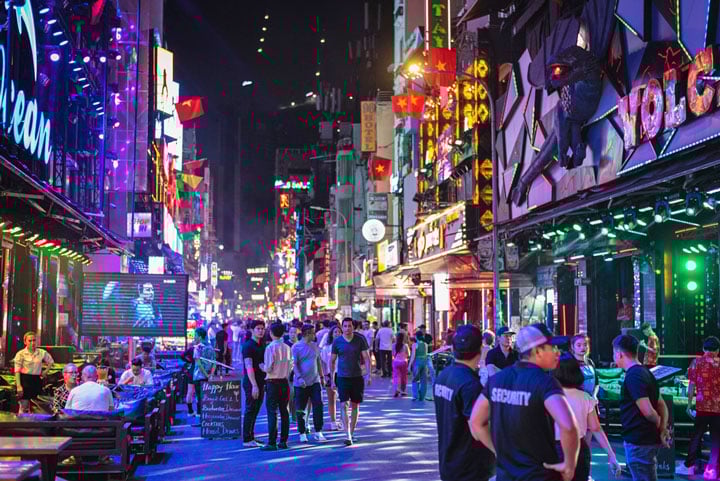
Which country suits whom best
The outcome varies significantly depending on the type of traveler. For a short holiday, Vietnam can be an excellent alternative to Thailand for many Dutch and Belgians, especially if price, culture, variety, and a less touristy feel are important. However, Thailand remains the stronger choice for those who want more direct flights, desire more comfort, prefer traveling within familiar tourist infrastructure, or are primarily seeking beaches, service, and logistical convenience. For a stay of two to three months, Vietnam performs surprisingly well, precisely because 90 days are officially feasible without complicated itineraries.
For long-term stays, Thailand remains the stronger choice. This applies especially to retirees, travelers with medical needs, and digital nomads who want not only fast internet but also coworking spaces, English-speaking service, and clearer accommodation options. Vietnam wins out for budget travelers, price-conscious solo travelers, and those who enjoy experiencing a bit more local dynamism. Thailand wins for couples seeking comfort, for winter visitors seeking stability, and for anyone who prioritizes care, accessibility, and convenience over the lowest price.
- Solo travelerVietnam is cheaper and more adventurous, Thailand is easier and more social.
- JobsThailand often scores better on comfort and beaches, Vietnam on tours and value for money.
- Winter visitorVietnam is strong for up to about three months, Thailand is more practical for recurring long stays.
- PensionerThailand is clearly stronger due to healthcare, expat networks, and residency routes.
- Digital nomadThailand is easier, Vietnam is cheaper and technically more than usable.
The bottom line is that in 2026, Vietnam is a good alternative to Thailand, but not to the same extent for everyone. For holidays and winter stays of up to about three months, Vietnam is often cheaper and more attractive than many travelers think. For healthcare, comfort, accessibility, and truly long stays, Thailand remains the more complete choice for the time being.
Sources: Vietnam Travel, Vietnamese e-visa service, Royal Thai Embassy, Ministry of Foreign Affairs, Netherlands Worldwide, Tourism Authority of Thailand, Thai Government PRD, Joint Commission International, ECB, Skyscanner, Booking, Numbeo, Nation Thailand, VietnamPlus
About this blogger

-
This article has been written and reviewed by the editorial team. The content is based on the author's personal experiences, opinions, and independent research. Where relevant, ChatGPT was used as a tool for writing and structuring text. We also sometimes generate photos using AI. Although the content is handled with care, it cannot be guaranteed that all information is complete, up-to-date, or error-free.
The reader is responsible for the use of the information on this website. The author accepts no liability for any damage or consequences resulting from the use of the information provided.
Read the latest articles here
 Car insuranceApril 14, 2026Buying a car in Thailand often goes wrong due to these 15 mistakes.
 HealthApril 14, 2026Living in Thailand and your health: more than just tropical vaccinations
 TravelApril 14, 2026Is Vietnam an alternative to Thailand in the winter?
 Expats and retireesApril 14, 2026Homesickness drives part of Western emigrants in Thailand back home