Groningen entrepreneur builds new life in Chiang Mai (video)
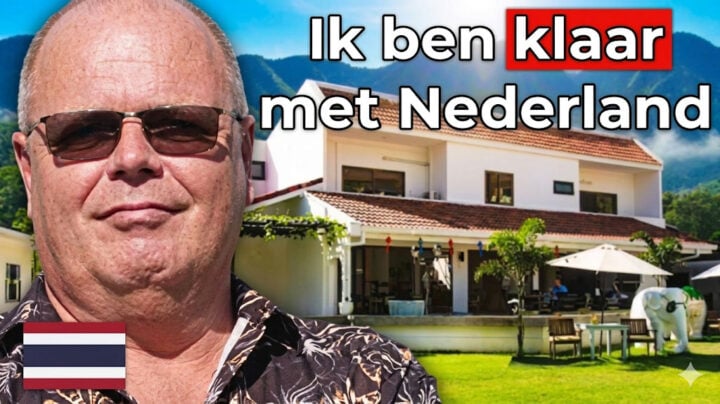
When Bert Prenger landed at Schiphol and his phone was flooded with messages once again, he had had enough. For years, he ran an insurance and real estate agency in Groningen, handled tax matters, and worked with clients who always wanted something from him. In 2023, he decided things had to change. He sold everything and left for Thailand on September 1st, a country where he had long wanted to live.
That step did not come out of the blue. Bert also had a background in the hospitality industry, including at Van der Valk and in cafes in Groningen. Moreover, he had been taking his sick mother in the Netherlands into account for years. Only when she herself encouraged him to follow his dream did he dare to leave for good. He now lives and runs his business in Chiang Mai.
From insurance office to hospitality in Chiang Mai
Bert grew up in Groningen and started working at a young age. School turned out not to be his path, so he started working in a supermarket and later ended up in the hospitality industry. There, he learned what hospitality, discipline, and entrepreneurship mean. Later, he switched to the insurance and real estate sectors because they held more future prospects. Yet, the hospitality industry continued to beckon. When he became bogged down in work pressure and routine in the Netherlands, he opted for a radically new start in Thailand.
In Chiang Mai, he found a place where peace, space, and entrepreneurship come together. He calls it one of the most beautiful cities in Thailand, precisely because of the combination of city, mountains, and nature. According to him, the real Thailand lies outside the city, with greenery, mountain scenery, and a relaxed pace of life. That environment was a contributing factor. For Bert, it was not just an emigration, but also a return to the kind of work that had always appealed to him: welcoming people, creating a place, and building something tangible himself.
An old house became a guesthouse, restaurant, and bar.
When Bert found the property, it consisted mainly of a house with a terrace and an old carport behind it. Virtually everything had to be stripped, demolished, and rebuilt. Downstairs, he created a restaurant with a professional kitchen, installed a bar, and also built rooms for guests. Additionally, a parking lot was added, something he considers a real advantage in that area of Chiang Mai. He also created four staff rooms behind the building for his partner's family.
The renovation did not go smoothly. Bert had to deal with contractors, permits, and slow processes at the municipality. At times, he was truly fed up with it. Nevertheless, he persevered. The business now operates as a guesthouse, restaurant, and cozy bar where guests can sit quietly, eat, and drink. The bar officially has a license until midnight, but because the grounds can be closed off with a gate, it can sometimes continue afterwards as a private gathering. However, Bert does take the neighborhood into account. According to him, loud music deep into the night does not fit in with that.
Doing business in Thailand requires patience and realism.
According to Bert, you shouldn't try to replicate the Netherlands in Thailand. The legislation might seem familiar in parts, but the implementation is different—slower and more hierarchical. What is arranged in half a day in the Netherlands can easily take a week in Thailand. Anyone who can't handle that will get stuck. His advice is simple: go with the rhythm of the country, accept the dynamics, and realize that as a foreigner, you are a guest.
That is why he considers a Thai partner, or at least strong local support, almost indispensable. Otherwise, you can quickly run into problems, especially regarding financial matters, official procedures, and language-sensitive issues. At the same time, he warns against another pitfall: blind trust. According to him, many foreigners make the mistake of investing too quickly in land or a house in their partner's name. Since a foreigner cannot own land in their own name, this is risky. He recommends an apartment instead, as that can be legally secured much better.
Connecting the Dutch and building a new home at the same time
An important part of Bert's life in Chiang Mai revolves not only around making money, but also around connection. He noticed that many Dutch people in Thailand have a need for contact, recognition, and a place where they can feel at home for a while. That is why he helped establish a Dutch association in Chiang Mai, which now has nearly 45 members. He also collaborates with other Dutch hospitality entrepreneurs in Thailand. For example, they organize golf days, visit each other, and refer guests to one another.
He also sees this urge to bring people together reflected in his network surrounding Elephant Parade Land. This social enterprise supports an elephant hospital in Thailand and sells painted elephant statues, with a portion of the proceeds going towards the care of injured elephants. Bert appreciates such initiatives precisely because they demonstrate that entrepreneurship and social engagement can go hand in hand. He tries to implement this in his own business as well. His partner's family received housing, work, and a chance for a more stable life in Chiang Mai.
Costs, visas, risks, and the real life behind the dream
Anyone who thinks living in Thailand is automatically cheap is mistaken, according to Bert. You can live quite comfortably there on a state pension, but you can't go out lavishly as if everything costs nothing. His own company has ongoing monthly expenses of about 100.000 baht, mainly due to rent, staff, purchasing, and high electricity costs. Electricity alone adds up quickly due to air conditioning, kitchen appliances, and ventilation. He considered solar panels, but found the investment too large for a rental property with a limited payback period.
Visas and work permits are also stricter than many people think. Bert explains that a tourist entry is different from a visa and that you cannot continue building indefinitely on it. He himself works with a non-B visa and work permit. This also means that he must have Thai employees on the payroll and is not allowed to perform certain tasks himself, as these are protected for Thai nationals. On top of that, he faced unexpected setbacks, such as a severe flood where water suddenly flooded the premises. Yet, he also witnessed Thailand's resilience: within a few days, everything was cleaned up and the business was up and running again.
Bert sometimes misses his friends, acquaintances, and a simple Friday afternoon drink from the Netherlands. He also mentions salted herring without hesitation. But he does not regret leaving. He does, however, honestly admit that if he had known everything beforehand about the intensity, contractors, staff, and endless details, he might have thought about it longer. Yet, one conclusion is certain for him: anyone who wants to embrace Thailand as it is, with respect for the rules, the culture, and the relationships, can build a surprisingly rich and free life there.
Source: Friday Feeling video
About this blogger

-
This article has been written and reviewed by the editorial team. The content is based on the author's personal experiences, opinions, and independent research. Where relevant, ChatGPT was used as a tool for writing and structuring text. We also sometimes generate photos using AI. Although the content is handled with care, it cannot be guaranteed that all information is complete, up-to-date, or error-free.
The reader is responsible for the use of the information on this website. The author accepts no liability for any damage or consequences resulting from the use of the information provided.
Read the latest articles here
 emigrateApril 13, 2026Groningen entrepreneur builds new life in Chiang Mai (video)
 BackgroundApril 13, 2026Why relationships between Western men and Thai women often fail
 Money and financeApril 13, 2026Is it possible to invest and speculate in Thailand?
 Expats and retireesApril 13, 2026Living in Pattaya, Naklua, or Jomtien: Jomtien offers the best living balance, and Naklua wins on tranquility.
Oh how nice… does this Groningen business have a name too? Can we offer him something from Groningen?