
Tickets to Thailand are becoming more expensive due to a sharp rise in kerosene prices.
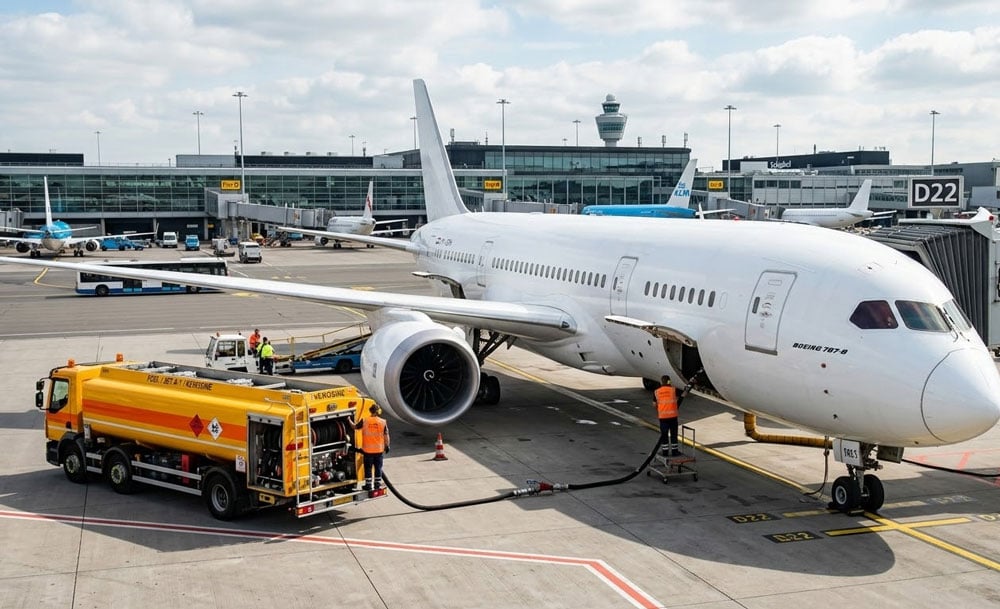
Those flying to Thailand may soon notice it immediately in the ticket price. Airlines are increasingly passing on the sharply increased costs of kerosene to passengers, as tensions in the Middle East persist and a major oil supply route remains disrupted for an extended period on the global fuel market.
This is relevant for travelers to Bangkok, as tickets to Asia are becoming more expensive. KLM raised prices on short, medium, and long-haul routes, and SAS even canceled flights because, for the time being, it cannot cover the fuel costs from its own funds.
Fuel price shoots up in a short time
The immediate cause is the exceptionally rapid rise in kerosene prices. According to IATA data, a barrel of kerosene cost just over 99 dollars at the end of February. That level is now above 175 dollars. This represents an increase of nearly 77 percent in a short period. For airlines, fuel is one of the largest cost items. If such a price movement persists for days or weeks, pressure on margins and ticket prices becomes apparent almost immediately.
For passengers, this increase is not always visible as a separate item on the ticket. Airlines often choose to incorporate the higher costs directly into the total amount. As a result, a ticket suddenly appears more expensive, without you seeing exactly what portion consists of fuel costs. This makes comparison more difficult for travelers, especially on routes where prices already fluctuate significantly.
KLM and THAI Airways pass on higher costs
KLM has now increased ticket prices on several types of routes. Since the beginning of this week, customers on short- and medium-haul return flights are paying 10 euros more. A surcharge of 50 euros has already applied to long-haul flights since March 11. For flights to and from North America, an increase of 30 euros had already been implemented earlier, after which another 20 euros was added on top of that. For travelers between Amsterdam and Bangkok, this increase on long-haul routes is particularly relevant.
THAI Airways has also taken action and had previously announced that it would increase ticket prices by 15%.
SAS takes tougher action and cancels flights
At SAS, it is not just a matter of more expensive tickets. The Scandinavian airline has also canceled flights because fuel costs are rising too rapidly. Reuters reported that SAS plans to cancel approximately 1.000 flights in April, after hundreds of flights were already affected in March. With this, the airline demonstrates that the current fuel crisis extends beyond just a price increase for travelers.
For travelers, this serves as an additional warning. Those flying back to Thailand or the Netherlands via European hubs or Scandinavia will not only face higher fares, but potentially also fewer available seats and less flexibility regarding rebookings. Especially during busy travel periods, this can lead to faster price increases than you would normally expect.
Strait of Hormuz remains the weak link
According to energy experts, the core of the problem lies with the ongoing disruption around the Strait of Hormuz. That route is of great importance to the global oil trade and therefore also to the supply of kerosene. As long as that supply remains uncertain, airlines are counting on fuel prices to remain high for the time being. That explains why companies are already taking measures and are not waiting for the market to cool down on its own.
Adding to this is the fact that many fuels for Europe and other regions are directly or indirectly dependent on imports from countries around the Persian Gulf. It is precisely this dependency that makes the market vulnerable. If the disruption lasts longer, there is a high probability that more airlines will follow suit with surcharges, price increases, or a temporary reduction in flight availability. This hits holidaymakers, business travelers, and expats just as hard.
The message for travelers is clear. Anyone flying between Europe and Thailand in the near future should expect higher ticket prices and less predictable availability. As long as kerosene remains expensive and supply is uncertain, airlines will continue to pass on the extra costs or adjust their schedules.
Sources: NOS, Reuters, IATA
About this blogger

-
This article was written and checked by the editors. The content is based on the author's personal experiences, opinions and own research. Where relevant, ChatGPT was used as an aid in writing and structuring texts. Although the content is handled with care, no guarantee can be given that all information is complete, up-to-date or error-free.
The reader is responsible for the use of the information on this website. The author accepts no liability for any damage or consequences resulting from the use of the information provided.
Read the latest articles here
 EnvironmentApril 4, 2026Pressure on the government is growing as air pollution in Northern Thailand worsens.
 Flight ticketsApril 4, 2026U-Tapao takes first step towards new airport city near Pattaya
 HealthApril 4, 2026Opinion: Cancer law in Thailand must do more than treat
 BackgroundApril 4, 2026Good Friday and Easter in the Netherlands, Belgium, and Thailand
I bought return tickets for November with Thai Airways the day before yesterday. The tickets cost €225 more each today. Bought just in time.