

Healthcare costs in Thailand can surprise you: this is what you pay at private clinics

A broken wrist after a scooter crash in Phuket. A sudden kidney stone in Bangkok. Or just a persistent ear infection in Chiang Mai. In Thailand, private healthcare is often fast, modern, and well-organized, but you also pay Western prices, especially if you don't have good insurance.
This article gives you a clear overview of what emergency care, a doctor's appointment, scans, and hospitalization can cost, as well as the approximate cost of long-term care for the elderly. We convert amounts to euros using the February 2026 exchange rate and explain the origins of price differences. This will help you plan, compare, and avoid surprises.
First of all: prices are indicative and vary by region.
Not all private clinics are created equal. In Bangkok, Phuket, and on popular islands, you often pay more than in Chiang Mai or provincial cities. The type of hospital also matters: a top international hospital charges higher fees for service, facilities, and language support. Furthermore, costs can quickly rise due to tests, medication, specialist fees, and a private room.
The rule of thumb for conversions is: 1 euro is approximately 37 baht. This is useful for quick calculations, but consider the euro amounts as a guide only.

Emergency care, from dengue to scooter crash
In emergencies, speed is paramount. Thailand has a national emergency medical number, 1669. In practice, you'll often end up at a private hospital in an emergency, especially in tourist areas. Expect to be asked for a payment guarantee immediately. Without insurance, a deposit or credit card guarantee may be required before expensive tests or treatments begin.
What you often see with Dutch and Belgians:
- A scooter accident, often with broken bones or abrasions.
- Severe dehydration or food poisoning.
- Dengue, especially in the rainy season.
- Heart problems or stroke in older winter residents and retirees.
Costs vary enormously. A relatively simple treatment might be reasonable, but surgery, intensive care, or medical evacuation quickly pushes the bill into the tens of thousands of euros. In the case of a serious scooter crash requiring surgery and hospitalization, costs ranging from hundreds of thousands to millions of baht are not uncommon.

Regular care, consultations, scans and admission
Thailand is actually very accessible for regular healthcare. You can often see a doctor or specialist without a referral, especially at private hospitals. This is a comforting experience, but it also encourages further investigation. A doctor's visit rarely ends with just a consultation. Blood tests, X-rays, ultrasounds, or scans are often suggested quickly, sometimes justifiably, sometimes simply as a precaution.
Guide prices that you regularly encounter in private care:
- A basic consultation costs roughly several hundred to several thousand baht.
- A specialist is usually more expensive than a general practitioner.
- Imaging is a significant expense. An MRI can range from procedures for a single body part to much higher prices in top hospitals, especially if contrast fluid, additional consultations, and hospital fees are involved.
- Admission costs vary considerably from room to room. A private room may seem affordable, but additional charges for service, meals, and nursing care are also included. In international hospitals, the room bill alone can be quite hefty.
An important detail that many people only realize when something goes wrong: private hospitals prefer direct payment. Submitting a claim afterward is possible, but you must have the cash to pay yourself first.
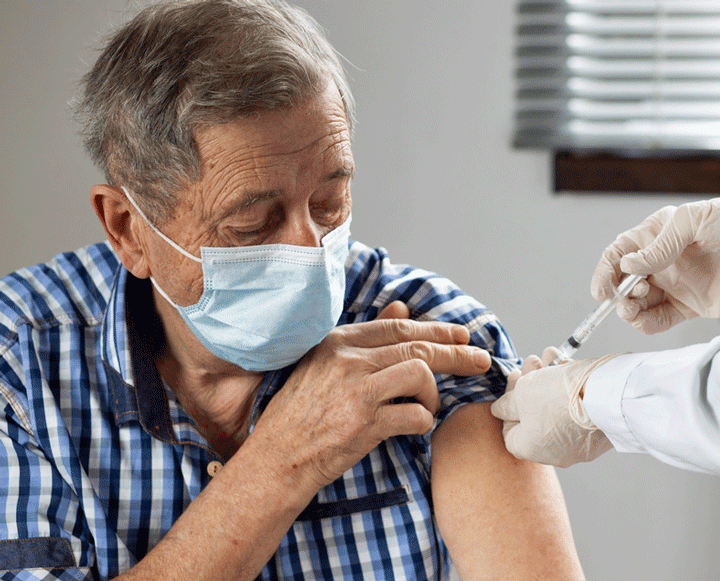
Long-term care, rehabilitation and elderly care
Long-term care is a world of its own. Travel insurance doesn't cover it, and even international policies often limit coverage for rehabilitation, home care, or long-term nursing. Yet, some Westerners choose Thailand for precisely that reason: for the same price, you often get more care hours and personal attention than in Europe.
Roughly speaking, you see three flavors:
- Assisted living, independent living with light assistance.
- More intensive nursing care, including assistance with washing, dressing and medication.
- Specialised dementia care, with higher staffing levels and therefore higher monthly costs.
Chiang Mai is popular for this type of care, partly due to its more relaxed pace and wide selection. Bangkok and the islands are often more expensive, simply because housing, staff, and facilities cost more there.
What does it really cost, a quick price list
The amounts below are typical ranges and examples from private healthcare. The euro amounts are rounded to a rate of approximately 37 baht per euro.
| Concern or situation | Guide price in baht | Guide price in euros |
|---|---|---|
| Basic consultation in a private hospital | 800 to 2.500 | 21 to 67 |
| Specialist consultation | 2.000 to 6.000 | 54 to 161 |
| Private room per night, international hospital example | 10.600 total per night | 284 |
| MRI promotional price for one body part, excluding additional fees | 5.888 | 158 |
| Dengue with recording, sample bandwidth | 24.000 to 87.000 | 644 to 2.334 |
| Scooter accident with treatment and possible surgery | 210.000 to 2.100.000 | 5.635 to 56.347 |
| Medical evacuation, sample bandwidth | 280.000 to 420.000 | 7.513 to 11.269 |
| Dementia care, example all-in per month | around 110.000 | around 2.952 |
Do you see a pattern? For minor care, it's not too bad. For admissions, surgeries, intensive care, or transport, it skyrockets.
Insurance and visa: what you really need to know
For tourists, the choice is simple: don't travel to Thailand uninsured. A scooter accident can wreak havoc on your financial planning for years. If you have serious concerns, always call your insurer's emergency response center so they can help you choose a hospital, cover your insurance, and possibly arrange repatriation.
It's important for expats to be clear about their insurance coverage. If you work in Thailand, you may sometimes have basic coverage through the social security system, but many expats still opt for an international policy to pay for private healthcare.
Visa regulations also play a role for retirees. Some long-stay visas, such as Non-Immigrant OA, have health insurance requirements, with minimal coverage for outpatient and inpatient care. Those seeking a Long-Term Resident visa usually need to demonstrate substantial medical coverage or maintain a substantial bank deposit. This isn't just paperwork; it's also a signal: Thailand assumes you can cover your own healthcare costs.
And finally
Thailand has excellent private healthcare, which is helpful if you get sick far from home. But the bills can be hefty, especially in the event of accidents or hospitalizations. If you're a tourist, good travel insurance with medical coverage isn't a luxury, but a basic necessity. If you live or spend the winter here, it pays to honestly compare your policy, your deductible, and your financial buffer. Then you can enjoy life in Thailand with peace of mind, even if something unexpected goes wrong.
Citation
- Bumrungrad International Hospital, room rates and explanation, rates effective January 1, 2026.
- Samitivej Chonburi Hospital, MRI package price and conditions, available until June 30, 2026.
- Bangkok Hospital Hua Hin, explanation and step-by-step plan for calling 1669, updated July 25, 2025.
- National Institute for Emergency Medicine, document on emergency care with reference to hotline 1669.
- Royal Thai Consulate General Chicago, visa OA and OX, minimum coverage 40.000 baht outpatient and 400.000 baht inpatient.
- Royal Thai Embassy Wellington, explanation of compulsory health insurance (OA) with minimal coverage.
- Thailand Board of Investment, LTR requirements: minimum USD 50.000 collateral or alternatively bank deposit.
- Overview of sample costs for dengue, accident and evacuation.
About this blogger

-
This article was written and checked by the editors. The content is based on the author's personal experiences, opinions and own research. Where relevant, ChatGPT was used as an aid in writing and structuring texts. Although the content is handled with care, no guarantee can be given that all information is complete, up-to-date or error-free.
The reader is responsible for the use of the information on this website. The author accepts no liability for any damage or consequences resulting from the use of the information provided.
Read the latest articles here
 Flight ticketsApril 3, 2026Qatar Airways scales up: Bangkok and Phuket back on schedule
 Flight ticketsApril 3, 2026Lufthansa sees first signs of kerosene shortage in Asia
 SocietyApril 3, 2026Nakhon Pathom shocked by child begging network that remained active for years
 Money and financeApril 3, 2026Gold price in Bangkok under pressure due to waning hopes for lower interest rates
I've been in a private hospital a few times. The first thing they ask for is your credit card. Not sure what's wrong with you.
These days, I just go to the state hospitals. They're just as good. Sometimes you see the same doctors from the private hospitals. And the medicines are much cheaper.
There is one downside: the long wait times. If you go to the ER, things go faster.
For me personally, never again a private hospital.
Nongkhai large modern state hospital with large dental department x-rays very good and large in four colors with nerves etc. everything as in a sharp picture large wisdom tooth extracted 4 roots / x-ray 2 anesthetics name prescription total price 500 baht
3 times in hospital in Nongkhai life-threatening sugar level 410 blood pressure 230
also Cellulite Bacteria in private room 1200 baht per day including food and drinks 5 days located
total incl medication 12000 baht
admission to main hall for 5 days 80 baht per day, 5 years ago
A few times admission in the weekend for heart and oxygen etc. 200 to 500 baht, immediate help at 1:00 in the morning on Sunday.
Those long waits could also be a death sentence. Lump in my neck, state hospital in Bangkok. I had to wait half a day before I could see an ENT doctor. He decided an ultrasound was necessary. But that meant a three-month wait.
I went to a private hospital... The ENT doctor there also decided an ultrasound was necessary. But that could be done right away. A nurse accompanied me to the department where the ultrasound could be performed. A five-minute wait. Back to the ENT doctor, who already had the results. A biopsy... Turned out to be cancer.
The cost of the consultation in the private hospital was about THB 500 higher.
For everyday matters, I usually go to my local government hospital. This saves me a lot of travel time.
I had to be admitted to the hospital this month because the fever I had lasted too long.
After a blood test at the hospital, they diagnosed me with dengue fever. I had to be admitted immediately. I only experienced symptoms of a bad cold, but apparently, not every dengue patient experiences the usual symptoms like joint and muscle pain.
Three days after my fever was gone, I wanted to go home. The doctors and nurses were professional, but there's no peace and quiet in a state hospital, even though I slept with blinders and noise-canceling earplugs.
I had to stay a few more days until the doctors were reassured that there would be no internal bleeding. For example, I wasn't allowed to brush my teeth for fear of bleeding gums.
Finally, after six days, I was discharged. And the final bill, including the bed, care, food, numerous blood tests, and medication, cost just like a reasonably good hotel – 9.226 baht. However, you can really get a good night's rest in a hotel!
Finally
There are also private rooms in state hospitals. But you have to be lucky to find one available, and then you pay a bit more. Last year, when I was completely bedridden, I bought a very well-adjustable hospital bed. This made it possible to arrange for home nursing care.
Medical care in Thailand is certainly no worse than in the EU. I'm referring to private hospitals. State hospitals are a different story, often due to a lack of the necessary equipment and/or facilities.
However, the healthcare system in TH is anything but appealing to me. It's much better organized in BE and most EU countries.
The failing TH healthcare system is the main reason I'll never settle there permanently. If I fall victim to a serious illness, I don't want to be dependent on the decisions of an insurance company, much less the limitations of my wallet. The stories I've experienced with this system defy the imagination.
But everyone must decide for themselves how they want to live their life.
Indeed, I have been in various hospitals and could easily insure myself against
150 euros per month, unfortunately I have also been informed that it is not 100% certain whether the insurance will pay or not.
Because of this I have decided to be uninsured and whatever happens mai pen rai so be it because I have no money for doctor or hospital visits.
Living on €600 a month is perfectly doable with my wife, but you just have to relax and enjoy beautiful Thailand and Nongkhai.
taking life as it is doesn't have to be expensive, drink water and eat once a day, budget for 2 people 8000 baht
Non-private (state hospitals) often rely on practical assistance from family members (help with eating, dressing, washing, etc.) due to their limited staff. Language can also be a problem.
They are therefore not suitable for single foreigners without family/friends nearby.
The prices quoted here don't reflect reality. Three years ago in BNH Pattaya, I was charged 90.000 THB for an emergency examination (including an x-ray) plus one overnight stay. This was for a non-complex wrist fracture. Surgical intervention was estimated at 500.000 THB. Naturally, my Belgian travel insurance chose to repatriate me.
By the way, these travel insurances get a 30% discount on the private price….
I was here in Khon Buri Korat in a Government hospital for an examination. I waited 6 hours for the doctor's examination + paid for the medicines, 158 bth, that made me happy.
On Saturday, I paid B4.000 at the modern Phayao Ram private hospital for an ENT consultation and a course of antibiotics for an ear infection. The bill shows B600 for the doctor's fee and B1.745 for the hospital.
At the state hospital, I might have paid a lot less with the same doctor, but then I would have had to wait for hours. I didn't want that. This time, I was helped immediately.
I am very well insured for the 3 months that I am here, so I will definitely get it reimbursed.
Last year in May I had an MRI scan at a private hospital here in Khon Kaen because a large black haze had appeared in my right eye.
Cost me 16K baht
Indeed, I have been in various hospitals and could easily insure myself against
150 euros per month, unfortunately I have also been informed that it is not 100% certain whether the insurance will pay or not.
Because of this I have decided to be uninsured and whatever happens mai pen rai so be it because I have no money for doctor or hospital visits.
Living on €600 a month is perfectly doable with my wife, but you just have to relax and enjoy beautiful Thailand and Nongkhai.
taking life as it is doesn't have to be expensive, drink water and eat once a day, budget for 2 people 8000 baht
uninsured? May I buy… and then start crowdfunding?
Last month I had a prostate examination in Khonkean...Bangkok Hospital.
A one-hour MRI scan with contrast fluid and a doctor's explanation costs 21.000 baht, or 567 euros.
Good treatment and good explanation.
What I don't understand is that, as of last year, you have to pay the bill yourself first and then get a refund from your health insurance. Apparently, this isn't made clear to many people. I discovered this by accident myself. The SOS system still works normally in Europe, but not elsewhere.
depends on the reputation (notoriety) of your travel insurance and their response time.
If the recording is short-lived, their payment guarantee may not be received on time.
In a previous hospitalization for a broken wrist (mentioned above), they initially requested payment of the full 90 THB, but ultimately agreed to a 20 deposit, which I could pick up a few days later. And then I think, who on earth would want to wander around in "paradise" without even a 20 THB (540 euros) reserve in their pocket? Probably too much, I'm afraid.
For outpatients and for an amount up to a maximum of 8k (216 euros), most insurance companies provide that you pay this first and then claim it back from them.
For the older Farang, 70+, there's little choice but to live here uninsured or return to the Netherlands or Belgium. Above a certain age, their insurance is simply canceled. Pre-existing conditions are also excluded from all insurance policies.
Insurance here is like someone lending an umbrella. When it starts raining, they want it back.
That's partly true, but then you want to buy an umbrella when it threatens to rain or you want to take out fire insurance when your house starts to burn down.
Many expartes who have never paid premiums in advance between the ages of 24 and 50/65 come to Thailand and want all deficiencies to be reimbursed.
I think it's unfair that we can't claim health insurance from the Netherlands, which we've paid for for years. But that's not the fault of Thai insurance companies, but the fault of Dutch (partly government) insurers.
You're absolutely right Theiw.
There is much to be said about commercial insurance policies or Dutch healthcare for emigrants, but just as much to be said about policyholders overseas, though not all of them, of course.
This is only partially correct. The insurance policy isn't simply canceled! The terms and conditions clearly state the age limit for insurance, and I haven't yet encountered any insurance policy that doesn't state this. So you know in advance the age limit.
There are also those who will insure you at any age, but the older you get, the more conditions you may have had, and these will either be excluded or taken into consideration.
I switched to another insurance policy in 2023 at the age of 73. I only have 2 exclusions and am insured for my entire life, with an annual increase of 3% due to 1 major claim.
Without a claim, there would have been no increase for 3 years.
What I gather from the comments here is mainly “the race to the bottom”.
Pay as little as possible for building a house, legal advice ("legal consul" by a non-lawyer in most cases), on the market, and even medical care.
forget about quality, about certainty, mai,pen rai, as long as it's cheap, the cheapest.
one can then brag about it at the bar (or even here on TB), see cheap again… and drink another pint.
In Thailand the general rule is "what you see is… NOT what you get"
Can anyone recommend a hospital in Thailand for lower spinal surgery?
MRI scan needed, then 2 vertebrae to be fixed or an artificial disc to be installed... I think.
I had that about fifteen years ago in the BKH in Korat,
Broken vertebra that had collapsed.
Of course MRI to see the damage and treatment correctly.
Then injected with 'cement' [stuff from Germany] between the vertebrae, no knife is used.
It took a long time before things felt pleasant again, even with medication to promote bone growth.
I have no idea what the costs were anymore, so I'll inquire in 2026.
This doctor, who was then known as THE specialist https://www.bangkokhospital.com/en/ratchasima/doctor/manoon-leownorasate-m-d,maar there are many now.
Also has a private company in Korat near the station. [then]
Strength and success
I had surgery for a herniated disc in my neck in 2004 at Bumrungrad Hospital in BKK. 240.000 baht, everything was perfect, but it will probably be a lot more expensive now.
In RAM hospital in Khon Kaen MRI scan with contrast fluid taken from back 10000 bath without doctor consultation
Which insurance policy can provide peace of mind for a couple? I have travel insurance with Argenta and both have pre-existing conditions. Who doesn't? Age 63 usually covers 3 months/year in Thailand, later at 65, 6 months/year.